Notes from a Maintainer - Prashanth Udupa, Scrite
Six years of building Scrite taught me one thing I hadn't expected: the right community multiplies what you can do alone. Here is what FOSS United specifically unlocked for me.
The Scrite project started on 25th March 2020, the first morning of India's first COVID lockdown. I was at my in-laws' place in Shimoga with my Mac, and I needed something to keep my head occupied to distract myself from the depressing lockdown news that was on loop. My consulting gigs had dried up overnight. So I started writing code.
Six years later, Scrite has been used by ~50k users and we are nearing ~2k paid subscribers. It supports screenwriting in English and several Indian languages, and is now adding French, Vietnamese, and Japanese. Films written in Scrite have made it to festivals. Writers share their work on social media. People compare it to Final Draft. I mean, THE FINAL DRAFT.
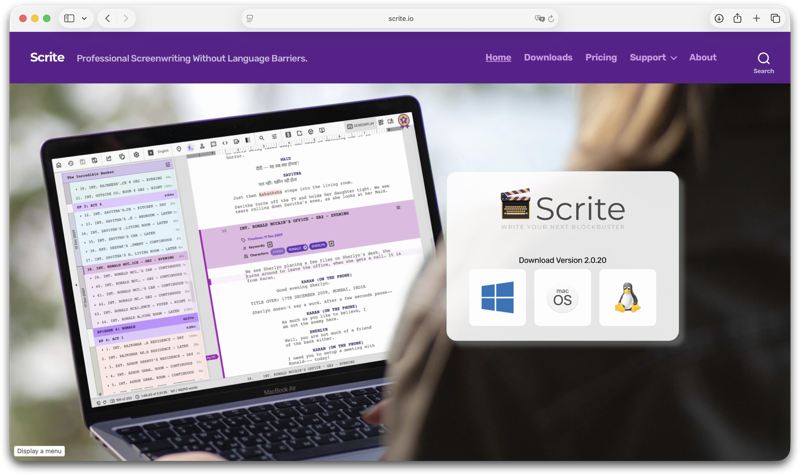
None of that felt inevitable when I was hacking together the first prototype. And a significant chunk of the growth in the last couple of years, I can trace directly back to FOSS United and the community around it.
This is the story of five specific things that happened because I showed up.
The GitHub Panic and the Refactor
Sometime in mid 2025, Scrite got listed in the FOSS United Forklore directory.
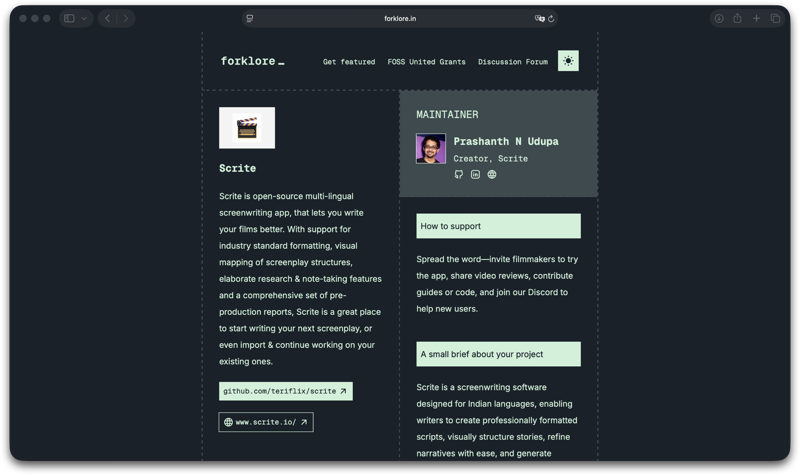
I noticed a sudden surge in GitHub activity. New eyes on the code, people asking questions I hadn't been asked before.
I started panicking.
The thing is, Scrite started as a prototype. A personal project I built in a lockdown to scratch my own itch. At some point, prototype became production software. And along the way, I had collected one too many hacks. The kind of code you write when you're moving fast and promising yourself you'll clean it up later. Well, later had arrived.
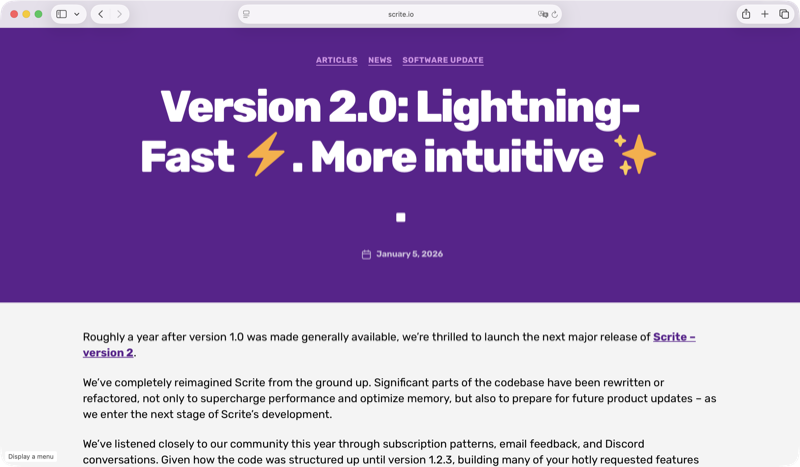
Getting approved for a talk at IndiaFOSS was what finally forced my hand. Nothing like a public commitment to make you actually do the thing. I used the deadline as a forcing function and spent the months before the conference doing a serious refactor and rewrite of large parts of the codebase.
The result was Scrite Version 2.0, which released in Jan 2026. Better performance, cleaner internals, new features. The fear factor worked. I'm not sure I'd have done it otherwise.
Kailash's Talk and the Alar API
Scrite has supported Indian language input from the very beginning. That was Director Abhaya Simha's doing, really. When I showed him the first version, his immediate question was: does it support Kannada? That one question set the direction.
But what we had for a long time was fairly basic. You'd switch the input method, type in your script, and Scrite would handle the font and rendering. It worked, but it wasn't particularly elegant.
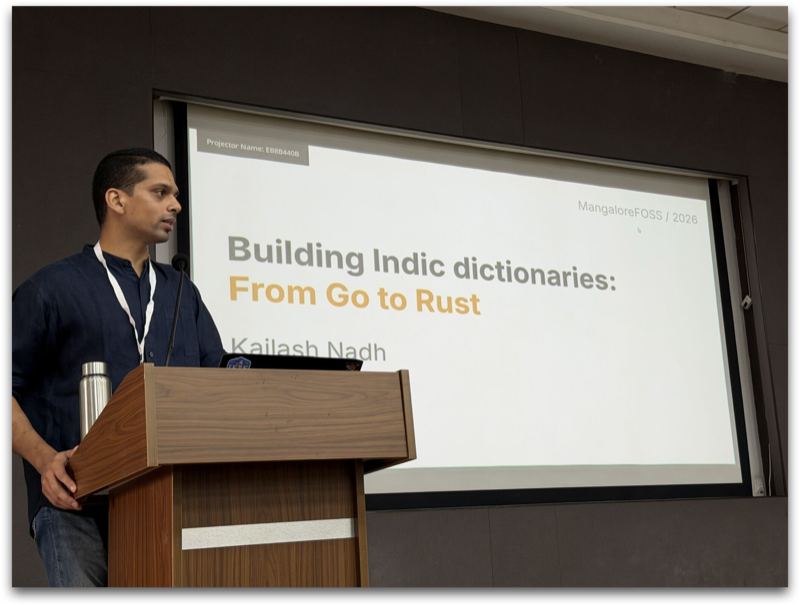
At MangaloreFOSS, I attended a talk by Kailash about Alar, a Kannada-English dictionary and transliteration API.
Something clicked. I went back and integrated the Alar HTTP REST API into Scrite's language input system. Now, as a writer types phonetically in English, Scrite fetches transliteration suggestions from Alar and shows them in a small popup. The writer picks the right word and keeps going.
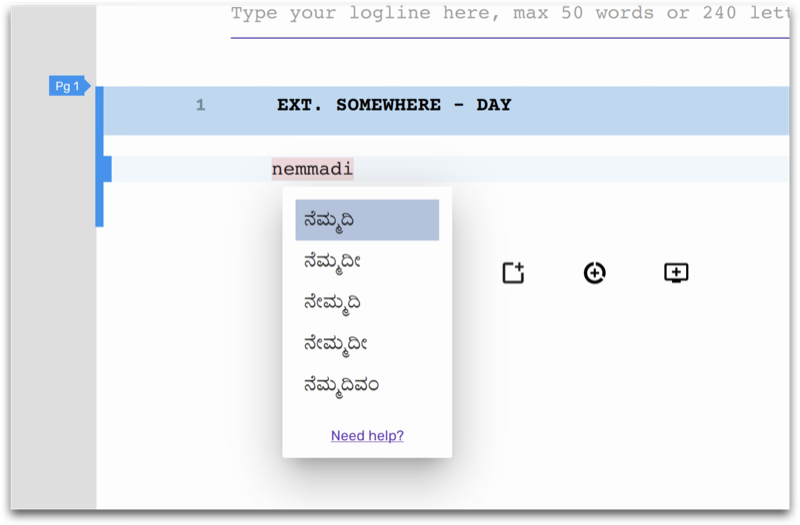
That was the obvious use case. But then I got some interesting feedback. It turns out, some actors prefer reading Kannada dialogue in phonetic English rather than in the Kannada script. They're more comfortable with it, and it's easier to learn lines that way. So I've been meaning to build reverse transliteration: using the Alar dictionary to automatically convert Kannada text back into phonetic English. A writer writes in Kannada, an actor reads it in English. Same words, different script.
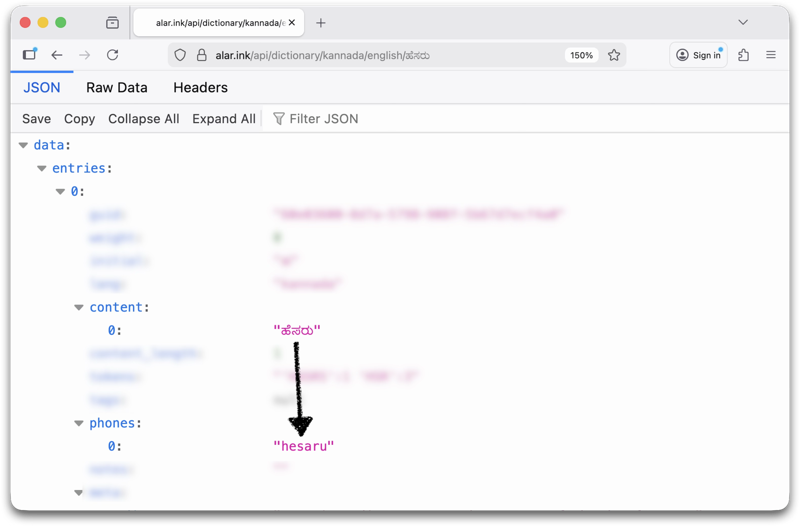
The idea for this feature implementation came directly from a talk I went to because I showed up at a conference. I hadn't gone looking for it. It found me.
The Designer and Twenty Years of GUI Eyes
I have been writing GUI applications since 2001. You'd think that after twenty years I'd have decent design instincts. I didn't, really. I just had developer eyes, which is a very different thing.
At one of the FOSS United events, I met Jeswin, a designer. We ended up chatting for a while. He looked at Scrite's UI and said something simple: your icons are all from different families. Pick one family and stick to it.
That was it. That was the whole insight. One hour, one conversation, and it fixed something I had been looking at for years without seeing. I went back and replaced all the icons with a consistent set from the same family.
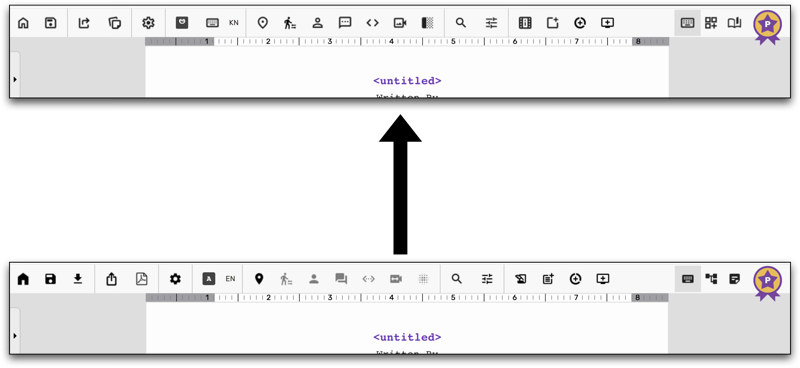
The difference was immediately visible, and the feedback from users reflected it.
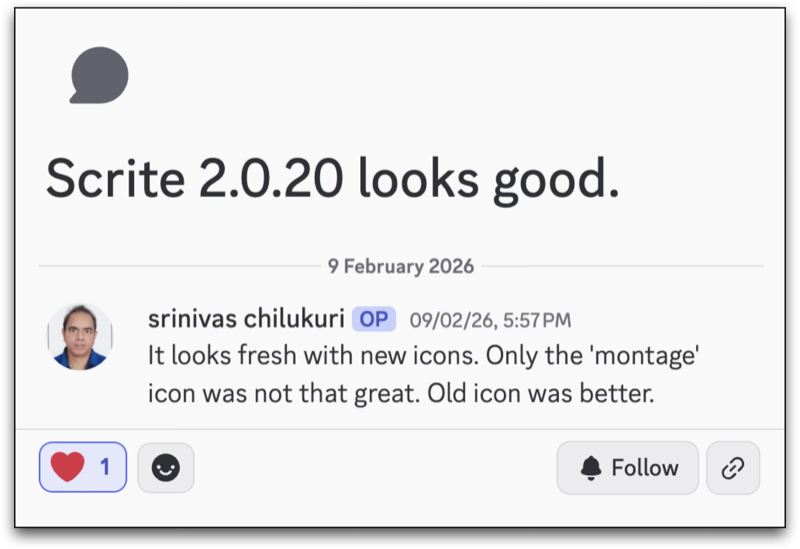
I think about that conversation a lot. Twenty years of building GUIs and it took a designer at a FOSS conference to tell me something I should have known. The community gives you things you didn't know you were missing.
A Samosa Break and the Help Center
At another FOSS United event, during a samosa and coffee break, someone mentioned MKDocs. That one offhand conversation led to something that has genuinely changed how I handle support.
I rebuilt Scrite's user guide as a markdown-based site using MKDocs.
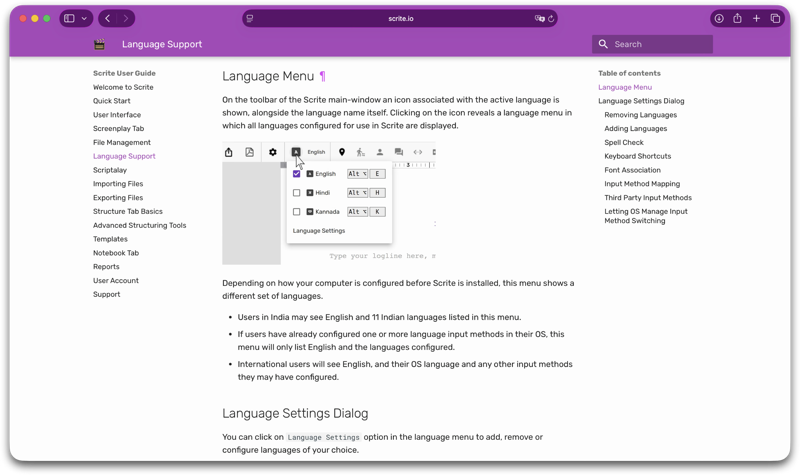
The nice thing about MKDocs is that it generates a JSON search index alongside the site.
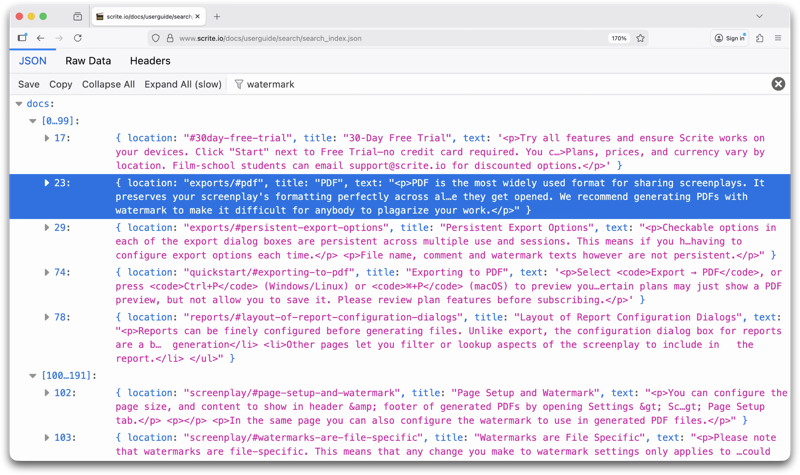
Once I had that, I built a Help Center directly into Scrite, triggered by pressing F1. It queries the user guide index and surfaces relevant articles right inside the app, without the user having to leave what they're doing or open a browser.
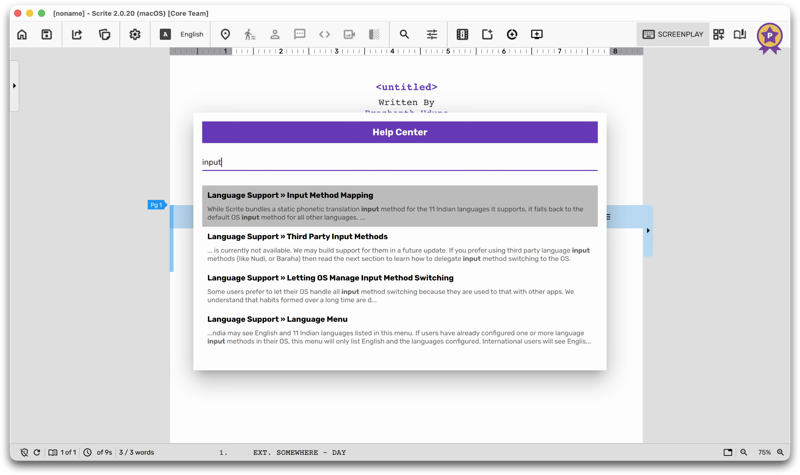
Support tickets dropped noticeably after that. Writers found answers themselves. The ones who did write in were asking more specific, more interesting questions. It's one of those features that sounds small but has a disproportionate impact on both the user experience and on my own time.
All of it came from a break-time conversation.
Interns, PDFs, and On-Device AI
Through FOSS United, I got connected with IIIT Delhi and was able to engage interns to work on two problems I had been putting off for a long time.
The first was PDF import. A lot of screenwriters receive scripts as PDFs, and there was no good way to bring those into Scrite. The interns have built a command line utility to parse PDF screenplays and convert them to the Fountain format, which Scrite can then import. It's not accurate, but they have done an excellent job of exploring potential approaches.
The second was on-device AI summaries. Writers often work on long scripts and need to quickly recall what a scene is about, or what a particular character has done so far. The second team of interns built support for running a local Ollama instance to generate scene and character summaries without sending any data to the cloud. Privacy-first, which matters a lot to writers working on unproduced material. Again, its not entirely functional but has enough potential to eventually make it to the app.
I've been thinking about the next step, which is feeding those AI summaries into image generators to give writers instant storyboards. Early days, but the foundation is there.
Neither of these would have happened without the FOSS United network. I didn't have the bandwidth to do them myself, and I wouldn't have known where to find the right people.
A Lawyer and Patent Troll Defense
This one I hadn't expected at all.
Through FOSS United, I met a lawyer named Biju. I hadn't really thought about Scrite's legal posture, to be honest. Terms of use, privacy policy, that sort of thing had been sitting on a vague to-do list for a while. Biju will now be able to do a proper review and help us with that.
More importantly, he helped Scrite sign up with the LOT and Open Invention Network.
LOT & OIN are community-based patent non-aggression pact. Members cross-license their patents to each other and collectively defend against frivolous patent trolls. For a small open-source project that has started gaining real visibility, that kind of protection matters more than I had realised.
I had been thinking about FOSS United primarily as a technical community. The fact that it also connects you with legal expertise was a genuine surprise and a genuinely useful one.
The Pat on the Back
I want to mention one more thing, which is harder to quantify but no less real.
Building something for six years, mostly with a small team, can get lonely. There are stretches where you're deep in a refactor nobody sees, or handling support tickets at 11pm, or trying to figure out pricing for a market you don't fully understand.
Kailash, Rahul, Ansh, Shree, Jeswin and many from FOSS United, at different points, said encouraging things about Scrite and about the possibility of grants and support.
“In less than 10 years, make Scrite the global gold standard.” - Kailash Nadh
“We’d be happy to consider a grant proposal from Scrite” - Rahul Poruri
“Scrite should be a partner project at FOSSHack2026” - Ansh Arora
Those conversations didn't change any code or ship any features. But they mattered. Knowing that people whose work you respect are paying attention and rooting for you, that does something to your energy levels.
The community pat on the back is real!
What I'd Tell Someone Starting Out
If you are building something open source and you are not plugged into FOSS United, you are leaving a lot on the table.
Not because the community will do the work for you. It won't. But because the right conversation at the right time, with the right person, can unblock something you've been stuck on for months. A designer at a conference fixed my icons. A break-time chat about documentation changed how I handle support. An intern connection gave me features I couldn't build alone. A lawyer I'd never have found otherwise protected my project from patent risk.
None of these were planned. All of them happened because I showed up, gave talks, attended sessions, and talked to people.
Scrite is what it is today partly because of the code I wrote, and partly because of the community I found. I'm grateful for both.
What's Next?
The journey continues. A few things I'm working towards:
We are applying for a grant with FOSS United to help fund some of Scrite's running costs: server infrastructure, certificates, software licenses. These are the invisible costs that every open-source project eventually has to reckon with, and it's encouraging that there is a structure in place to help with exactly this.
I'll keep attending the monthly meetups, participating in forums, and listening. Some of the best things that have happened to Scrite came from conversations I wasn't looking for. That's reason enough to keep showing up.
Call for Action: Join FOSSUnited!
I want to be honest about something. Every time I attend a FOSS United meetup or conference, I find myself in the company of people who are orders of magnitude smarter and wiser than I can hope to be. And yet it never feels intimidating. It feels nurturing. That's a rare thing, and it's worth naming.
There is always something to learn. Whether from Anoop and the team behind Bruno, or Vishnu and the team behind Ente, or from speakers like Rajendran of OpenAlgo, Nilesh Trivedi of QwikBuild, Shree, Anand, and many many more. Every meetup I come back with something I didn't have before, an idea, a tool, a contact, a perspective.
The team at FOSS United is working to build a comprehensive community structure to support FOSS activity across India. Whether you want to keep your project purely open source, or explore monetisation, or build a for-profit enterprise around it, the support structure, the resource pool, the experience, and most importantly the intent to help, is real.
And it's not just for adults. My 14 year old son started learning Blender at 10. At FOSS United events he has given a talk, conducted a workshop, received a grant, delivered another talk, and just published a full Blender Basics course in Kannada. That journey is a full post, and maybe he will write it. But the short version is: the community works at any age.
The more we participate, the more we discover ways to make things better for future contributors to come. Come, let's build something larger together.
Prashanth Udupa is a software developer, trainer, and open-source creator based in Bengaluru. He is the creator of Scrite. You can watch the full talk on YouTube. Check out his profile on forklore.in
Prashanth Udupa
Creator of Scrite
No comments yet. Login to start a new discussion Start a new discussion