Skip to Main Content
Talk Intermediate First Talk

Open Hardware for Climate Resilience: From Rain Gauges to Flood Early Warning

Proposal status is Rejected
Session Description

Kerala has been reminded repeatedly — 2018, 2019, 2021 — that insufficient real-time weather and water-level data costs lives. When the 2018 floods struck, the India Meteorological Department had only 68 functional manual rain gauges serving an entire state that BIS standards say needs 256 weather stations. The gap between what exists and what communities need is vast. ICFOSS (International Centre for Free and Open Source Solutions), Kerala's state-supported open-source centre, has been quietly closing that gap with open hardware, open firmware, and open data pipelines.

This talk presents the full stack of what ICFOSS has designed, built, and deployed:

  • Automated Rain Gauge Stations — LoRaWAN-connected tipping-bucket gauges with open PCB designs, built for low-power field operation

  • Automatic Weather Stations (AWS) — multi-parameter sensors (temperature, humidity, pressure, wind speed/direction, rainfall, UV) transmitting over LoRaWAN to central servers

  • River & Pond Water-Level Sensors — ultrasonic and pressure-based sensors deployed at catchments, rivers, and irrigation ponds; configurable alert thresholds for safe / alert / cautious / danger states

  • LoRaWAN Network — community-deployable gateways/edge devices using open hardware l

  • Open Dashboards & Alert Systems — real-time web dashboards built on open platforms; SMS/app alerts routed to local bodies and disaster management authorities

  • Field Maintenance Realities — lessons from the field: solar power, weatherproofing, calibration, volunteer maintenance, and what breaks first

The talk ends with a live demo of the dashboard and a candid look at what it takes to sustain open civic infrastructure in the long term — not just deploy it.

All hardware designs, firmware, and software referenced in this talk are freely available under open licences.

Key Takeaways

A replicable architecture for community environmental monitoring using open tools

  • Practical understanding of LoRaWAN in Indian field conditions

  • Links to open repositories (hardware + software) to fork and deploy

  • Honest lessons on sustaining open civic tech beyond the pilot phase

References

Session Categories

Knowledge Commons (Open Hardware, Open Science, Open Data etc.)

Which track are you applying for?

Open Hardware

Speakers

Dr. Sunil Thomas Thonikuzhiyil
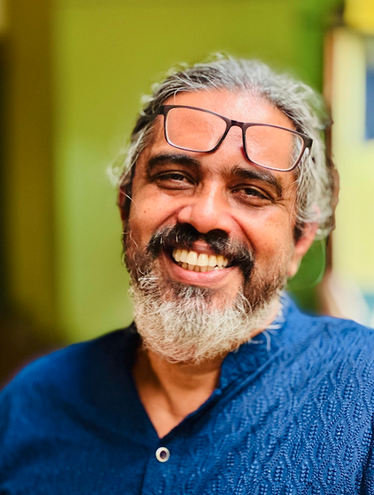
Dr. Sunil Thomas Thonikuzhiyil Director | ICFOSS

Dr. Sunil Thomas Thonikuzhiyil is the Director of ICFOSS (International Centre for Free and Open Source Solutions), Kerala's premier research institution dedicated to free and open-source technologies. He holds a PhD in Electrical Engineering from IIT Bombay and a degree in Law, a combination that informs his work at the crossroads of technology, governance, and public interest.

Over a career spanning academia, government IT, and applied research, Sunil has been a Lecturer in Electronics Engineering, IT Consultant at the Kerala Legislative Assembly, Professor and Principal at the College of Engineering Attingal, and Director at C-DIT. He serves on the Kerala Startup Mission Executive Committee, CUSAT Senate, KTU Board of Studies (Electronics), and the Kerala State Curriculum Committee, and is an Adjunct Faculty at Kerala Digital University.

His research spans applied machine learning, gesture recognition, large language models, vision transformers, and NLP. He has supervised PhD scholars, published research papers, authored books, and produced widely viewed video lectures on programming, software-defined radios, and machine learning.

An amateur radio operator (VU2SWX), homebrewer, and lifelong geek, Sunil is equally at home soldering a LoRaWAN gateway as he is debating cyber law or curriculum design.