Skip to Main Content
Lightning Talk Intermediate CC BY-SA 4.0 for slides and talk materials. Any demo manifests or sample scripts will be shared under the MIT License.

Unused Is Not a Kubernetes Field: Platform Hygiene Is Not Cleanup

Proposal status is Approved
Session Description

Cloud-native teams eventually run into the same problem: clusters accumulate resources that nobody fully understands anymore. Old namespaces, unattached volumes, stale services, abandoned Helm releases, deprecated APIs, manually created incident artifacts, and resources that are no longer clearly owned. The usual instinct is to write a cleanup script. This talk argues that this is the wrong starting point.

Kubernetes does not have a native field called “unused.” A resource can look stale because it is genuinely abandoned, but it can also look stale because ownership metadata is missing, a controller created it, GitOps no longer tracks it, observability is incomplete, or an inventory script failed during discovery. Treating “unknown” as “safe to delete” is how platform hygiene turns into a production incident.

This talk presents a practical workflow for safer cloud-native hygiene: Capture, Detect, Classify, Prove, Act.

Capture means making resources explain themselves through labels, annotations, ownership metadata, lifecycle state, and policy-as-code. Detect means continuously finding drift, deprecated APIs, orphaned resources, missing metadata, idle workloads, and configuration decay using open source tools. Classify means separating active, idle, unowned, controller-generated, incident-created, and unknown resources instead of treating them all as cleanup candidates. Prove means collecting evidence before mutation through GitOps state, owner references, metrics, logs, traces, diffs, and backups. Act means making cleanup staged, reviewable, observable, and reversible.

The talk will map this workflow to practical FOSS tools and patterns, including Kubernetes recommended labels, Argo CD orphaned resource monitoring, Flux or Argo CD GitOps workflows, Kyverno or OPA Gatekeeper for admission policies, Pluto or kubent for deprecated API detection, Trivy, Polaris, kube-state-metrics, Prometheus, Grafana, OpenTelemetry, Velero, and policy checks in CI.

Drawn from personal learning experiences, the goal is not to teach people how to delete more resources. The goal is to help platform, DevOps, and SRE teams improve their existing workflows so they can understand their clusters better, reduce operational risk, and make infrastructure changes safer.

Key Takeaways

Attendees will learn:

  1. Why “unused” is not a reliable Kubernetes concept, and why cleanup should be treated as an evidence-gathering workflow rather than a one-pass script.

  2. A reusable framework for platform hygiene: Capture, Detect, Classify, Prove, Act.

  3. How to capture ownership and lifecycle metadata using Kubernetes labels, annotations, Backstage-style service ownership, and admission policies with Kyverno or OPA Gatekeeper.

  4. How to detect drift, stale resources, deprecated APIs, and configuration decay using FOSS tools such as Argo CD, Flux, Pluto, kubent, Trivy, Polaris, kube-state-metrics, Prometheus, and Grafana.

  5. How to classify resources before acting, including owned-active, owned-idle, unowned-active, unowned-idle, controller-generated, incident residue, and unknown resources.

  6. How to prove safety before mutation using GitOps state, owner references, service endpoints, metrics, logs, traces, diffs, backups, and restore plans.

  7. How to design safer cleanup workflows with dry runs, explain mode, owner review, grace periods, quarantine, rollback artifacts, and post-cleanup validation.

  8. Why the safest platform cleanup is the cleanup you can explain, pause, review, replay, and roll back.

References

Session Categories

Technology architecture
Tutorial about using a FOSS project
Engineering practice - productivity, debugging
Talk License: CC BY-SA 4.0 for slides and talk materials. Any demo manifests or sample scripts will be shared under the MIT License.

Which track are you applying for?

Cloud & DevOps

Speakers

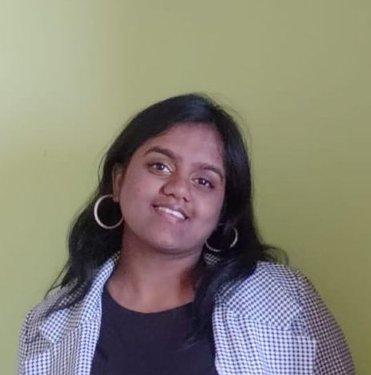
Harini Anand Data and AI SDE | IBM

I currently work as a Software Developer at IBM at the Data & AI Division, on IBM watsonx™,  which is our portfolio of AI products that accelerates the impact of generative AI in core workflows to drive productivity.

I am an Undergraduate Researcher for Software Engineering at UIUC under Prof. Darko Marinov. I am a Research Associate at Georgia Institute of Technology, working at the intersection of ML, systems biology, and interpretable AI, exploring computational approaches to understanding complex systems. I am Biomedical XAI Researcher at Dartmouth College where my research focuses on scalable, low-burden approaches for personalized prediction and monitoring of schizophrenia.

I previously worked at Niramai Health Analytix, a deep tech startup focusing on Breast Cancer and used ML frameworks as a Research Intern at Indian Institute of Technology Hyderabad, to predict gene regulatory networks. I have also built cognitive tools for reducing the onset of Dementia as a student entrepreneur. I led the largest technical community on campus, also held workshops and have given talks on Machine Learning, NLP, and Data Science. 

I’ve been admitted to top summer schools at Oxford University, London and Massachusetts Institute of Technology which specialize in the applications of AI in Healthcare. I am Google KaggleX Mentee, and an AWS Scholar and have been awarded merit scholarships. I am a strong advocate for representation in STEM, and recognized as a High Impact APAC Ambassador for the Women In Data Science Community, an initiative by Stanford University. I am also a Harvard WE Tech Fellow. I am a published AI researcher, a technical keynote speaker and have spoken at universities like Purdue University, IIT Madras, enterprises like Google, Microsoft Research, Intuit, and global conferences like Kubecon+CloudNative Con, MCP Dev Summit, Women Who Go, and FOSS United.

Harini Anand
https://www.linkedin.com/in/harini-anand-2002/