Skip to Main Content
Talk Intermediate

Postgres as the Second Brain

Proposal status is Rejected
Session Description

You can turn PostgreSQL into a personal, AI-accessible memory layer that any tool can read from and write to, and the entire stack runs on open source that you own and control. No vendor lock-in, near-zero cost, fully self-hostable.

The problem:

  • Our knowledge is scattered across meeting notes, chat threads, documents, and a dozen apps that never talk to each other.

  • Every AI tool builds its own walled garden of memory. Claude does not know what you told ChatGPT. Switching tools means abandoning your accumulated context.

  • Platform memory is effectively a lock-in strategy. Your knowledge becomes a hostage to someone else's business model.

The approach:

  • Use Postgres as a single, boring, battle-tested foundation that everything else plugs into.

  • Store relational metadata and vector embeddings side by side using the pgvector extension, so structured data and semantic meaning live in one place.

  • Connect any AI tool to this memory through MCP (Model Context Protocol), an open standard for AI-to-data communication.

What I will cover:

  • The architecture: how relational tables and vector embeddings coexist, and why one database is enough.

  • Semantic search in practice: pgvector, embeddings, and fast similarity indexing.

  • Ingestion discipline: what flows in, what stays out, and connecting sources through shared keys.

  • A live demo of querying months of accumulated context across tools.

  • My real-world experience building and living with this system: what worked, what broke, and the lessons learned along the way.

Who this is for:

  • Beginners walk away understanding the architecture and why owning your memory layer matters.

  • Experienced developers walk away with a concrete, self-hostable pattern they can build the same week.


Key Takeaways
  • Platform memory locks you in. Owning your own memory layer keeps your context portable across any AI tool.

  • Postgres is the right foundation precisely because it's boring, stable, and battle-tested.

  • With pgvector, relational and vector data live in one database. No separate vector DB needed.

  • MCP is the open standard that lets any AI tool connect to your data.

  • A good second brain is about curation, not capturing everything.

  • Context compounds. Every captured note makes the next query smarter.

  • The whole stack runs on open source you control, self-hostable at near-zero cost.


References

Session Categories

Technology architecture
Tutorial about using a FOSS project
Engineering practice - productivity, debugging

Which track are you applying for?

Main track

Speakers
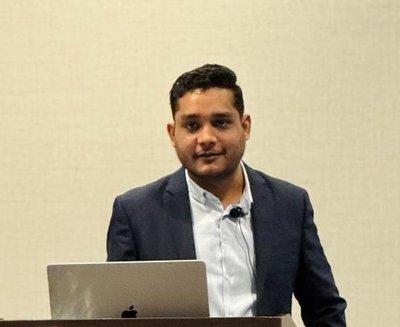
Yogesh Jain
Yogesh Jain Staff SDE | EnterpriseDB

Yogesh Jain is a Staff SDE at EnterpriseDB and a passionately curious full-stack developer. He specializes in building scalable solutions leveraging open-source technologies, with expertise spanning Kubernetes, observability, distributed systems, and cloud-native PostgreSQL.

He is currently working on developing EDB Postgres AI - a hybrid manager crafted to automate, manage, and observe AI-ready enterprise data across multiple platforms. He is dedicated to solving complex, real-world challenges through pragmatic and scalable engineering. More about him can be found on his personal blog site: curiousone.in/about