Skip to Main Content
Workshop Beginner The project will be licensed under the Creative Commons license.

Building for Users in the Impact Sector: Design Thinking for FOSS Contributors

Proposal status is Rejected
Session Description

Open source technology solutions can be a powerful lever to serve India’s social impact sector. They align with the sector’s resource constraints and contexts while also promoting agency by providing the decision making power over technology to the organisations themselves rather than locking them in proprietary systems. However, in order for FOSS to serve as an enabler for the social impact sector, FOSS contributors must understand how and in what contexts do these organisations work.

Social impact organisations often manage complex operations. To name a few, these include tracking beneficiaries, coordinating field teams, reporting to funders, maintaining data across programmes. They bring together different internal teams and external stakeholders working in different contexts. For instance, in some cases, frontline workers in the organisation may work in low connectivity environments or multilingual contexts or members in the program team may not be avid digital users. In such cases, a tool with a number of features might still not work for a user if it adds to their cognitive load, assumes a disproportionate level of digital literacy or does not fit how information actually flows through an organisation.

This workshop introduces design thinking as a lens for developers and contributors to think through these gaps, drawing on research conducted through interviews and field work with non-profits and the FOSS ecosystem working with India's social impact sector. 

The workshop shall discuss the following concepts central to this lens:

  • Understanding a user's actual workflow, context and needs before designing for it; 

  • Mapping how information flows through an organisation to find where tools genuinely help as opposed to where they add friction; 

  • Thinking about cognitive load, particularly for users who are not digital first.

Following this, we shall showcase our toolkit built for technology adoption by the social sector in India through a hands-on discussion format. The toolkit acts as a blueprint for organisations trying to map their work and data flows to understand their pain points or problem statements with the aim to provide organisations with a decision making framework to navigate their technology needs and structure their relationship with their stakeholders, especially tech partners and vendors. 

This session shall be useful to FOSS developers, maintainers, and contributors to understand what user-centred design could mean beyond what users need from an interface to include how an organisation works, what constraints they operate in, what their daily workflows look like and how to structure and ongoing relationship with them that builds on knowledge sharing.


Key Takeaways
  • A framework for understanding a user's workflow and context before making design decisions

  • How to map information flows to identify where a tool genuinely solves a problem versus where it adds complexity

  • Why cognitive load matters as a design consideration, especially for non-technical users 

References

Session Categories

Community
Talk License: The project will be licensed under the Creative Commons license.

Which track are you applying for?

Main track

Speakers

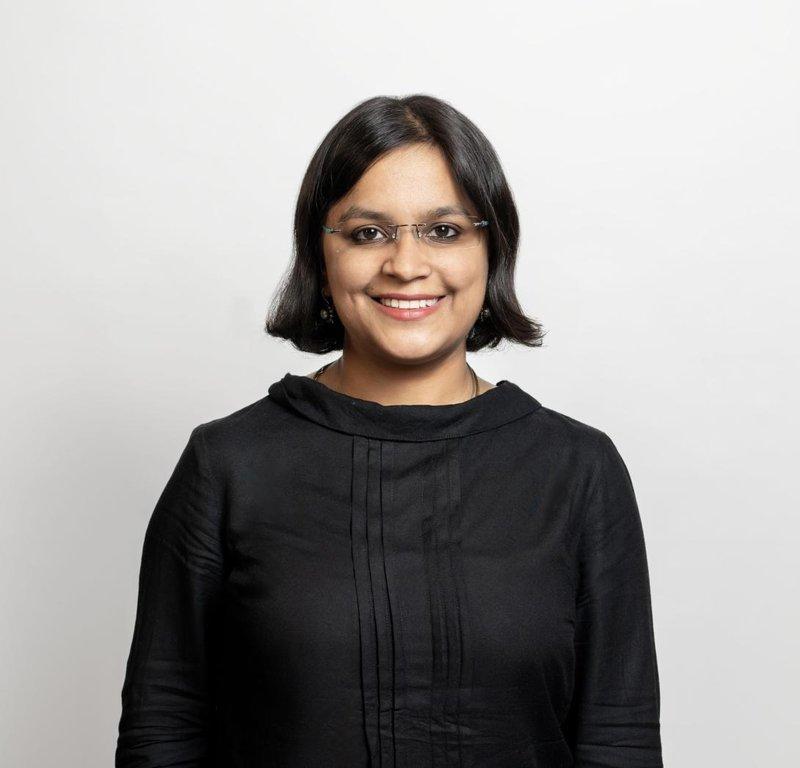
Titiksha Vashist
Titiksha Vashist Co-Founder and Lead Researcher | The Pranava Institute

Titiksha Vashist is co-founder and lead researcher at The Pranava Institute. Her work focuses on emerging tech regulation and the socio-political implications of technology in India. A political scientist by training, her research work at Pranava spans research topics including Responsible AI in the Public Sector in India, Trust and Safety, and Youth and Digital Cultures. She is also an Inaugural Maitri Fellow of the Department of Foreign Affairs and Trade, Australian Government, and an AI and Market Power Fellow 2025 of the European AI and Society Fund. As part of her work with the Maitri Program, Titiksha has worked on critical minerals cooperation between Australia and India, with the aim of producing a playbook for policymakers within both governments. Her extensive research on the topic included interviews with over 40 experts from government, industry, and academia, as well as engagement with policy ecosystems in both countries. She has also shared her findings in public media, for the Lowy Institute, the Australia India Institute and the La Trobe Asia podcast. Her work aims to take a 360-degree view of critical minerals policy, bridging security, economic and climate priorities. Titiksha is a political scientist by training, and holds a masters degree in International Affairs from Jawaharlal Nehru University, New Delhi. 


Amisha Mittal
Amisha Mittal Research Analyst | The Pranava Institute

Amisha Mittal is a Research Analyst at The Pranava Institute. ​At Pranava, Amisha works across diverse thematic areas including youth and digitalisation and open source adoption for the impact sector. She engages with diverse stakeholders and contributes to projects across the institute’s mandate, while building research on the ethical, social, and legal frameworks that can guide the future of technology.

Amisha’s work and interests revolve around emerging tech regulation and its interdisciplinary nature, sustainability, and data privacy. Amisha holds a Master of Laws in Intellectual Property and Technology Law from the National University of Singapore where she has worked as a Graduate Researcher at the Centre for International Law in the AI and Technology department. She completed her undergraduate studies in law from O.P. Jindal Global University, India (JGU). She has previously also served as a part time Teaching and Research Assistant at JGU.