Skip to Main Content
Talk Beginner GNU Affero General Public License version 3 (AGPL-v3) First Talk

Decentralisation: Hoax or Future of an Open-Source, Secure, Private, and Free Internet?

Review Pending
Session Description
Objective:
A beginner friendly talk on demystifying ZK-Proofs using math as a trust anchor for a decentralised, privacy-first internet model.

Brief:
The foundational philosophy of Free and Open Source Software (FOSS) is built on software freedom, user autonomy, and open collaboration. Yet, our digital world relies entirely on centralized frameworks built around "optimistic trust" between parties. When open-source code is hosted on centralized cloud servers or routed through monopolistic gateways, it remains exposed to surveillance, restriction, and malicious censorship. Many traditional client-server architectures and governance models have abused this power, creating systemic points of failure that threaten the future of a free internet.

Centralization forces an inherent trade-off for fundamental human liberties: user consent, data privacy, and freedom of access. These structures storing raw personal data often fail to bind legally or ethically to user-data privacy, frequently leaking or selling user data. There are some fundamental limitations and blind-spots in the current centralised frameworks that we have adapted to live with. If a single platform or state gatekeeps the infrastructure, entire communication channels can be restricted or censored overnight (As recently seen when the Telegram app got banned in India under a centralised governance model). Standard open-source code running on centralized cloud servers cannot solve this architecture-level problem.

Decentralization fixes this loophole. True decentralization is not a departure from FOSS—it is the ultimate structural enforcement of it. This talk strips down the speculative noise and financial hype surrounding Web3 to look at the pure essence of distributed blockchain technology: an open-source, append-only distributed ledger held together by consensus and math rather than a central authority.

When paired with Zero-Knowledge Proofs (ZKPs), this infrastructure solves the single greatest vulnerability of the modern internet: data exposure at the host layer. I will dive deep into how non-interactive ZK-proofs (like zk-SNARKs) enable total data abstraction. Attendees will learn about blockchain fundamentals and how a user can mathematically prove identity/ validity to an unspecified peer-to-peer network entirely on their local edge device, without ever transmitting or exposing their raw private data. (Example: proving eligibility to vote without ever revealing or sharing your Aadhaar card details)

Key Takeaways
  1. De-biasing Decentralization: How to separate the mathematical and structural primitives of blockchain technology from speculative financial aspects like DeFi.

  2. Math as a Trust Anchor: A clear, visual mental model of how Zero-Knowledge parameters (Completeness, Soundness, and Abstracted validation) work to create trust between anonymous peers.

  3. FOSS & Decentralization Alignment: Why a distributed, append-only architecture is a natural, necessary extension of open-source software principles to protect user liberties.

  4. Enforcing Data Abstraction: Understanding how local-first edge computation allows users to interact with public internet infrastructure while maintaining absolute privacy boundaries and without sharing raw data using Zero-Knowledge Proofs.

  5. Decentralized Governance Models: Evaluating how decentralized systems safely coordinate trust, establish code rules, and anchor real-world assets without a centralized authority.

References

Session Categories

Introducing a FOSS project or a new version of a popular project
Contributing to FOSS
Technology architecture
Community
Story of a FOSS project - from inception to growth
Knowledge Commons (Open Hardware, Open Science, Open Data etc.)
Talk License: GNU Affero General Public License version 3 (AGPL-v3)

Which track are you applying for?

Security

Speakers

Shubhanshi G Independent Researcher

Researcher, academician, and practitioner with multi-disciplinary background including research in aerospace industry (ISRO and IISc, Bangalore), TISS study in Psychology from TRF (Boston University), TMM from FDCW, Berlin.
Over the last few years, I’ve been deeply exploring meditation and web3. My areas of focus around FOSS are free and equal access to the internet, decentralisation, non-censorship, open-source, right to privacy, user consent, and data policy. Shefi India lead since 2025.
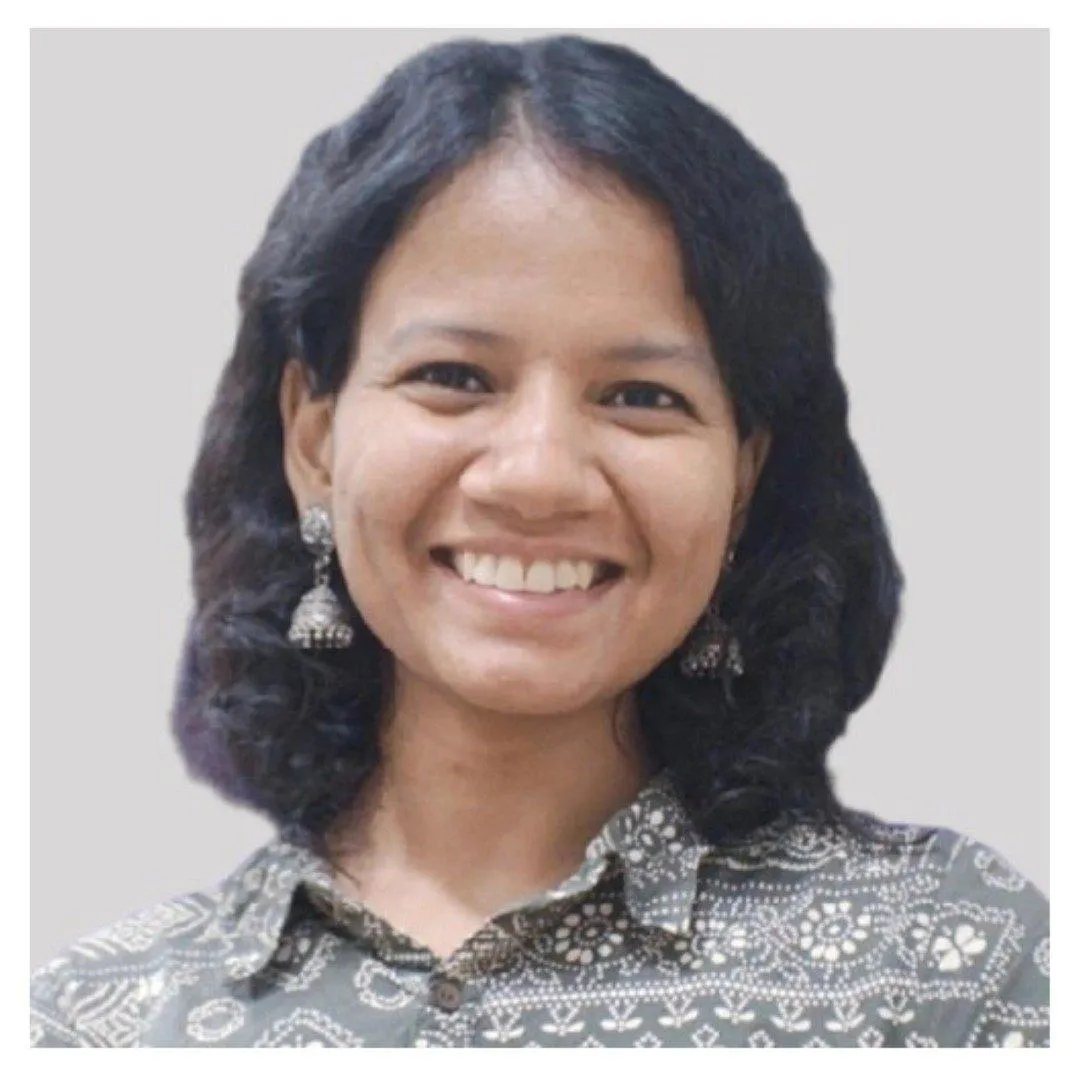
Shubhanshi G
https://x.com/web3_nemo