Skip to Main Content
Talk Beginner

The Steering Loop: Harness Engineering with OpenCode for the Agent-First Era

Proposal status is Rejected
Session Description

The bottleneck in AI-assisted software delivery is not the model. It is the environment around it.

In early 2026, OpenAI's Harness team shipped a million-line production codebase with three engineers and zero lines written by hand. Their diagnosis was blunt: when agents failed, the problem was rarely capability. It was missing structure, feedback, and mechanical constraint. Every gap they found was encoded back into the repository. The environment improved. The agents improved with it.

This compounding cycle is harness engineering, and in this session we demonstrate how to implement it using OpenCode, the open-source AI coding agent trusted by millions of developers and designed to work across models, providers, and deployment environments.

Harness engineering has two core components. Guides are feedforward controls that steer the agent before it acts—LSP integrations, structured AGENTS.md files, architectural guardrails, and reusable Skills. Skills allow teams to encode institutional knowledge directly into the agent's workflow: how to write tests, review pull requests, bootstrap services, enforce team conventions, and apply organization-specific engineering practices. They are versioned, reusable engineering assets that improve over time.

Using OpenCode as the implementation platform, this talk provides a practical blueprint for building an agent-ready engineering environment. Every pattern demonstrated is model-agnostic and can be adopted regardless of which LLM provider your organization uses.

Attendees will leave with a clear mental model for harness engineering, a forkable OpenCode-based harness architecture with reusable Skills, and a pragmatic understanding of where human judgment remains essential in the agent-first era.

Key Takeaways

Hi Team,

I'm Soumyadip, actively contributing to Backstage and exploring Harness Engineering within platform engineering.

We are integrating the harness scope directly into our platform work - building practical use cases around human-in-the-loop, agents, and AI Skills as platform capabilities. I would love to share implementation details and real-world learnings from this work during the session.

Looking forward to contributing.

Thank you !

References

Session Categories

Community
Contributing to FOSS
Technology architecture
Introducing a FOSS project or a new version of a popular project
Engineering practice - productivity, debugging

Which track are you applying for?

Main track

Speakers

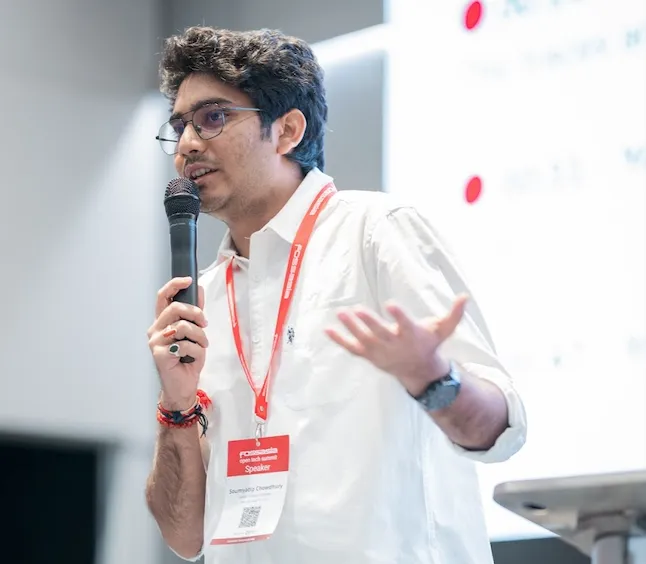
Soumyadip Chowdhury
Soumyadip Chowdhury Senior Software Engineer | Red Hat India Pvt. Ltd

Soumyadip is a Senior Software Engineer at Redhat with a passion for technology and knowledge sharing. With previous experience at HoiChoi Technologies and Bajaj Finserv, he brings a diverse background to his role. Soumyadip has actively participated in over 100 online and offline events as a speaker. His expertise extends to the domains of DTN (Delay Tolerant Networking) and Blockchain, where he has contributed by writing book chapters and journals. Soumyadip is known for his dedication to helping fellow tech enthusiasts enhance their skills, making him a valuable resource in the community.
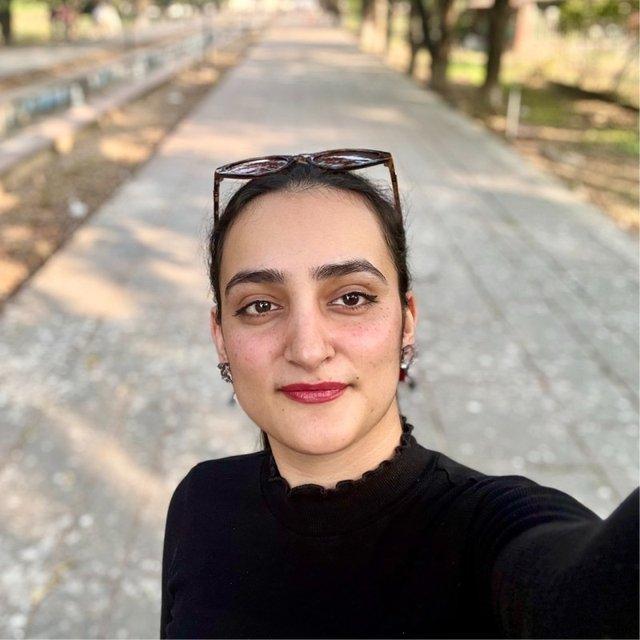
Shriya Chauhan
Shriya Chauhan Associate SWE | Red Hat India Pvt. Ltd

Shriya is a Software Engineer at Red Hat and a Google Summer of Code 2025 contributor with AsyncAPI.
A public speaker, open-source contributor, and Women in API community champion in India, Shriya actively works towards making tech more accessible and inclusive. She enjoys exploring developer communities, speaking at events, and contributing to conversations around cloud native technologies, APIs, and modern software engineering.
Coming from the hills and navigating her journey into metropolitan tech spaces, she strongly believes in giving back to the community. Beyond engineering, she is passionate about spreading awareness about technology in villages, encouraging students to explore open source, and contributing towards community-driven initiatives that create opportunities for others.
When she’s not coding or contributing to communities, she’s usually exploring ideas, storytelling through tech, and learning something new along the way.