Skip to Main Content
Talk Intermediate Apache-2.0

JavaScript Is Collecting Capabilities Faster Than We Can Update Tutorials

Proposal status is Rejected
Session Description

JavaScript has had one of the weirdest evolutions in tech.

It started as a small scripting language for browsers. Then it took over servers. Then mobile apps. Then desktop apps. And now somehow we’re talking about GPU acceleration, browser-native AI, scientific computing, and high-performance workloads running directly inside a tab.

At this point, every time we think we understand what JavaScript is for, the ecosystem unlocks another capability nobody expected.

In this talk, we’ll explore some of the surprisingly powerful things modern JavaScript runtimes can do today: WebGPU, WebAssembly, multicore processing, browser-native compute, numerical computing, and local-first architectures.

Through demos, benchmarks, and real-world examples, we’ll look at where these technologies genuinely make sense, where they don’t, and why modern browsers are becoming far more capable than most developers still realize.

Because honestly, JavaScript is evolving faster than our mental model of the web.

Adding sample presentation link from a previous, related talk for reference: https://docs.google.com/presentation/d/1--QCzYZnX12byPhC3jwKI6vwyCXFVxMxO82U4MQfhyE/edit?usp=sharing

Link to the stdlib project, which will be introdued in this presentation: https://github.com/stdlib-js/stdlib

Key Takeaways

This session is designed as a highly visual, narrative-driven technical talk exploring the evolution of JavaScript and the browser from a traditional UI environment into a surprisingly capable compute platform.

The talk follows a storytelling format, gradually building from familiar concepts into increasingly unexpected capabilities of the modern web platform. It starts with a relatable and slightly humorous look at how most developers still mentally model JavaScript and browsers today before progressively revealing how dramatically the platform has evolved over the last few years.

Throughout the session, the audience is taken through the broader evolution of computation on the web, beginning with the traditional client-server model and moving toward the rise of browser-native compute. 

The talk then introduces the modern browser runtime and explores technologies such as WebAssembly, WebGPU, multicore processing with Web Workers, and the growing ecosystem around scientific and numerical computing in JavaScript.

The session includes live demos, practical examples, architecture breakdowns, ecosystem discussions, and performance comparisons to keep the content grounded and highly engaging. 

Rather than being purely theoretical, the talk continuously demonstrates real-world capabilities of modern browsers and JavaScript runtimes through interactive examples and visual demonstrations.

A major focus of the session is maintaining a balance between technical depth, humor, storytelling, and big-picture architectural thinking. The goal is to create multiple “wait… browsers can do that now?” moments throughout the talk while still delivering meaningful technical insights for frontend engineers, backend developers, platform engineers, and JavaScript enthusiasts.

Attendees will leave the session with a significantly updated understanding of what modern JavaScript runtimes and browsers are capable of today, along with a broader perspective on how the web platform is evolving beyond its traditional role as just a UI layer.

References

Session Categories

Introducing a FOSS project or a new version of a popular project
Technology architecture
Talk License: Apache-2.0

Which track are you applying for?

Main track

Speakers
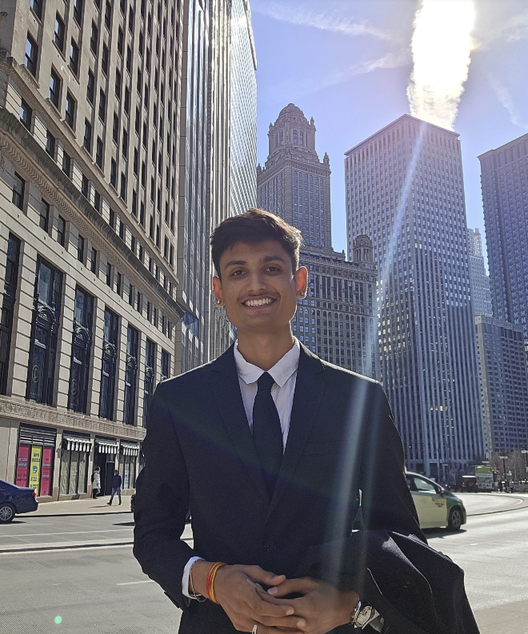
Gunj Joshi
Gunj Joshi Core Contributor | stdlib

Gunj Joshi is a core contributor of stdlib, the JavaScript standard library for numerical and scientific computing. His work spans special mathematical functions, FFT implementations, and automated generation of high-performance packages at scale. A Google Summer of Code contributor and mentor, he has spoken at JSNationUS, HPSFcon and FOSSASIA. Previously, he worked on Quantum Research at IBM and on open-source at Quansight.