Skip to Main Content
Talk Intermediate MIT License First Talk

Enabling Inclusion for 1 Billion: A Building-Blocks Approach to Language AI for the Global South

Proposal status is Rejected
Session Description

3500 of 7000 global languages are expected to go extinct. As people move towards digital systems across the global south, they find their tongues missing. It's not lost on over a billion people that their tongues exist mostly in voice, not written script. A language lost is cultures lost, wisdom lost. The for-profit AI Voice industry benefits from this exclusion, as the levers in the systems force the people in the commons to move towards learning the mainstream languages—creating incentive for education to exclude the same tongues.

While our country has rare institutions, in AI4Bharat and Bhashini, making available models expanding to non-mainstream languages, with Bhilli being the first tribal language in India to have its own ASR and TTS models, we are developing the blueprint and curating tools that we will open source during the event as a playbook on how to begin from use-case specific model creation as the first step towards inclusion, creating proof through adoption of digital services via voice and improving the lives of citizens in their own tongue.

However, our FOSS journey only starts there. We want to invite the FOSS ecosystem into helping shape public goods in language AI, deployable across sectoral DPGs which the private sector also benefits from. Our vision is to enable an ambitious FOSS ecosystem, and those outside it who don't speak the language of the system, to contribute towards building services in their own language through OS building blocks, enabling hyper-local services through Voice-AI that don't need Big-Cloud, proven through at-scale deployments not just in India but also in Africa, and to ask for help in imagining further building blocks that shape the open source language AI journey for citizens across the global south, to help improve the lives of 1 billion people by 2030.

Key Takeaways
  1. Why low resource language cannot wait for the LLM revolution, and we need to begin from domains specific ASR-TTS models
  2. Playbook for quick voice model development for low-resource languages that are domain specific
  3. Testing frameworks & the VOICE AI Open Source roadmap for FOSS developers that will be tested at Country Scale to help improve lives of the most excluded citizens
  4. A look into domain specific DPGs that have demand for open source Voice AI

References

Session Categories

Introducing a FOSS project or a new version of a popular project
Talk License: MIT License

Which track are you applying for?

Main track

Speakers

Shashwat Shukla
Shashwat Shukla Ecosystem Lead | COSS.org.in

Shashwat is the Ecosystem Lead at Center for Open Societal Systems, which drives global societal transformation by facilitating countries to develop their Digital Public Infrastructure and crafting compelling change narratives for adoption of Digital Public Goods to create impact at scale.   

COSS’s mission is to enable equitable, inclusive societal transformation by providing trusted technical guidance & co-creating digital solutions to advance the global adoption of Digital Public Goods (DPGs). We aim to improve the lives of 1 billion people globally by 2030 through adoption of Digital Public Goods (DPGs).

He’s working to build adoption strategy, and developer ecosystem for Open-Source Public goods through COSS. Prior to this, he lead the DPI strategy at Project Sukoon, India’s first mental-health chatbot co-created with 100+ mental health experts that is adopted by Physicswallah, a for-profit Unicorn and VOPA, an open-source non-profit unicorn.

He then joined VOPA, worked in the founders office, where he helped in empowering institutions through open-source technology and data-driven governance which is now running in 60,000+ government schools in Maharashtra.
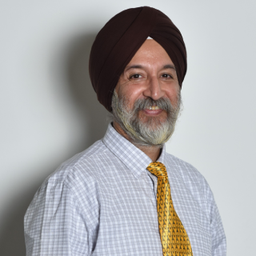
Manmeet Singh
Manmeet Singh Country Engagement Lead | COSS

Manmeet Singh is an open-source technologist and digital public infrastructure leader whose work sits at the heart of India's largest open-source ed-tech deployments. As Release Manager for Sunbird.org—the open-source platform powering DIKSHA, India's national digital infrastructure for school education—he helped steward community-driven, openly licensed technology adopted at national scale across multiple states. His tenure at EkStep (2017–2022) spanned releases of Sunbird and DIKSHA, alongside product work on open-source building blocks like Saral and cQube, and program leadership of the Gujarat and UP Vidya Samiksha Kendra initiatives.

As Country Engagement Manager at COSS (Centre for Open Source Software), Manmeet continues to champion open-source adoption as a public good, advocating for transparent, reusable, and community-owned digital infrastructure. With 28+ years of professional experience—the last 8+ in the social sector—and deep roots in Digital Public Goods and Digital Public Infrastructure, he brings a rare blend of large-scale delivery expertise (from his IBM days leading 400-person teams) and conviction that open source is the foundation for equitable, scalable impact.
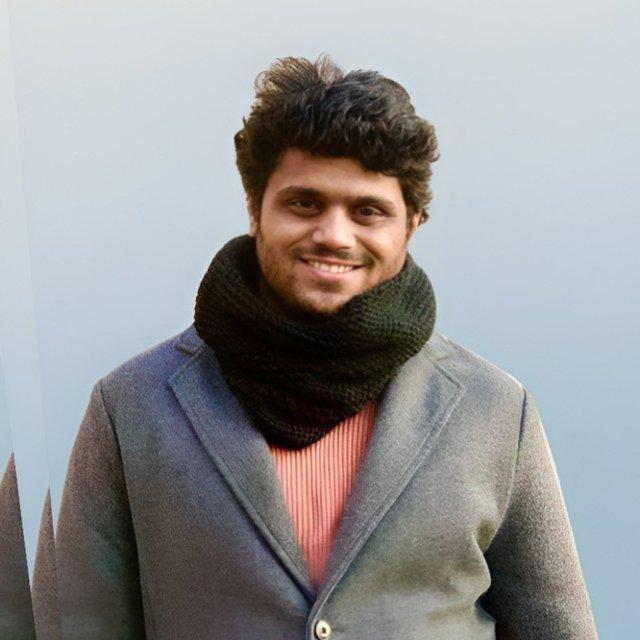
Kowshik
Kowshik Founder | framewise.ai

Kowshik is the founder of Framewise.ai, helping build the on-prem hardware compute for open-source model deployments to work at Scale at low costs.