Skip to Main Content
Workshop Beginner This work is licensed under a Creative Commons Attribution-NoDerivatives 4.0 International License - CC BY-ND 4.0

Open Learning: Lessons from Building the Unboxing Tech Toolkit

Proposal status is Rejected
Session Description

Open source is usually understood through the lens of software, code repositories and developer communities. However, the same principles including openness, shared ownership, iteration based on community feedback, and resources built to be adapted and reused apply just as meaningfully to educational content. This workshop will explore the Unboxing Tech Toolkit (UTT), a series of toolkits designed for youth to develop a healthy relationship with technology and safely navigate the hyper-digitalised world they inhabit as a case study in building knowledge commons.

In doing so, the workshop will invite participants to reflect on a broader question for the FOSS community- how do we build knowledge commons that are iterative and contextually relevant to the needs of their users. 

UTT is designed to help young people develop a healthier relationship with technology by understanding how the internet and AI function as physical, environmental, and socio-technical systems. 

The latest module of the toolkit traces how data travels through devices, cables, satellites, and data centres. It unpacks the energy, water, and other material costs behind everyday digital actions such as a search query or video streaming, and looks at the people, institutions, and governance structures that keep the internet running. The module also introduces participants to existing examples of community led and owned internet infrastructure like bamboo-built network towers in Indonesia, Mexico, and India or solar-routed web hosting. Alongside these, it draws on indigenous frameworks of regenerative design and harmonious use of technology as alternative ways of thinking about technological infrastructure that predate the extractive models the internet currently runs on.

The toolkit is an open educational resource and is released with facilitator guides in multiple languages so that educators and facilitators across regions can adapt and run it in their own contexts. It has been piloted across India, Cambodia, and the Philippines with over 410 participants and has been translated in various languages, including Khmer, Filipino, Kannada, Hindi, German. In the latest module of this toolkit, the translations in Khmer were done using community-led transla-thons, where workshop participants and volunteers in Cambodia translated toolkit content into Khmer to localise it. Pre and post workshop evaluations for this toolkit consistently showed measurable shifts in understanding and motivation to act. 

This workshop will be conducted in two parts. 

Participants will first work through selected activities from the toolkit in groups, to explore the internet as a physical system, how data and AI function at a systems level, and the environmental and material costs of digital technologies.

This is followed by a facilitated discussion connecting the hands-on experience to UTT’s approach to user centricity. We will explore: 

  1. How the toolkit tries to center community knowledge and what the process of making complex, technical information accessible to young people through information design looks like for the user centricity of this toolkit.

  2. How the toolkit’s content and design evolved through iteration and feedback gathered across different contexts through pilot workshops. 

  3. How working with diverse implementation partners helped localise the toolkit in various contexts, what challenges does this process pose and what are the best practices that emerge out of this.

Key Takeaways
  • Why is it important to make technical knowledge accessible to non- technical audiences and how do we go about it?

  • How we can build educational resources that center youth learning to foster interest in sustainable practices and topics. 

  • Designing for non-technical audiences requires translating complex systems into accessible formats without oversimplifying them. This workshop will help showcase that process. 

  • Community feedback and pilot testing across diverse contexts can meaningfully reshape a resource's design and delivery. It is thus important to adequately test your product with your user.

References

Session Categories

Knowledge Commons (Open Hardware, Open Science, Open Data etc.)
Talk License: This work is licensed under a Creative Commons Attribution-NoDerivatives 4.0 International License - CC BY-ND 4.0

Which track are you applying for?

Main track

Speakers

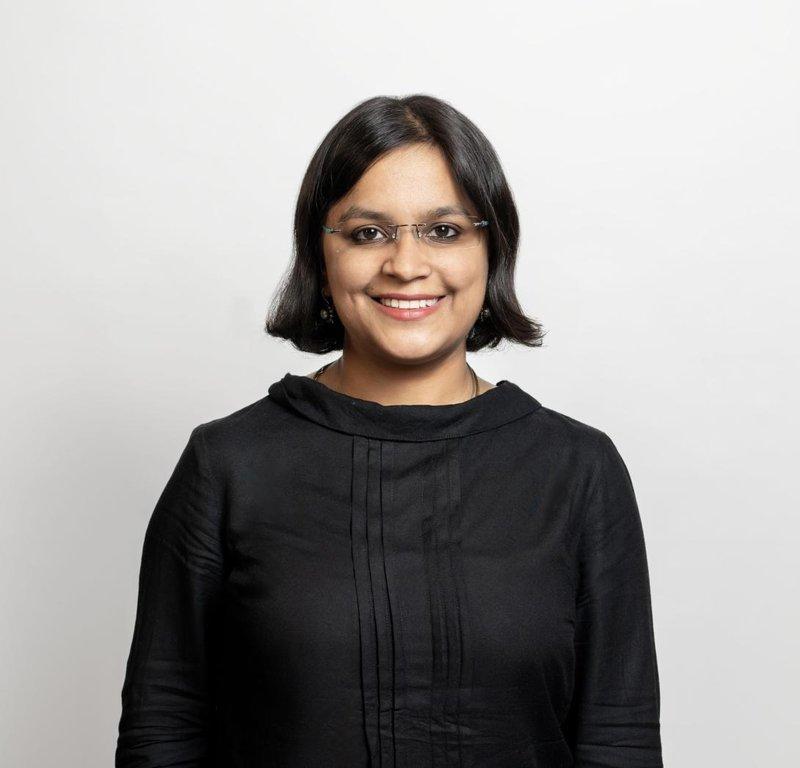
Titiksha Vashist
Titiksha Vashist Co-Founder and Lead Researcher | The Pranava Institute

Titiksha Vashist is co-founder and lead researcher at The Pranava Institute. Her work focuses on emerging tech regulation and the socio-political implications of technology in India. A political scientist by training, her research work at Pranava spans research topics including Responsible AI in the Public Sector in India, Trust and Safety, and Youth and Digital Cultures. Titiksha serves as a co-lead of the Unboxing Tech Toolkit project, since its inception in 2021. She is also an Inaugural Maitri Fellow of the Department of Foreign Affairs and Trade, Australian Government, and an AI and Market Power Fellow 2025 of the European AI and Society Fund. As part of her work with the Maitri Program, Titiksha has worked on critical minerals cooperation between Australia and India, with the aim of producing a playbook for policymakers within both governments. Her extensive research on the topic included interviews with over 40 experts from government, industry, and academia, as well as engagement with policy ecosystems in both countries. She has also shared her findings in public media, for the Lowy Institute, the Australia India Institute and the La Trobe Asia podcast. Her work aims to take a 360-degree view of critical minerals policy, bridging security, economic and climate priorities. Titiksha is a political scientist by training, and holds a masters degree in International Affairs from Jawaharlal Nehru University, New Delhi. 
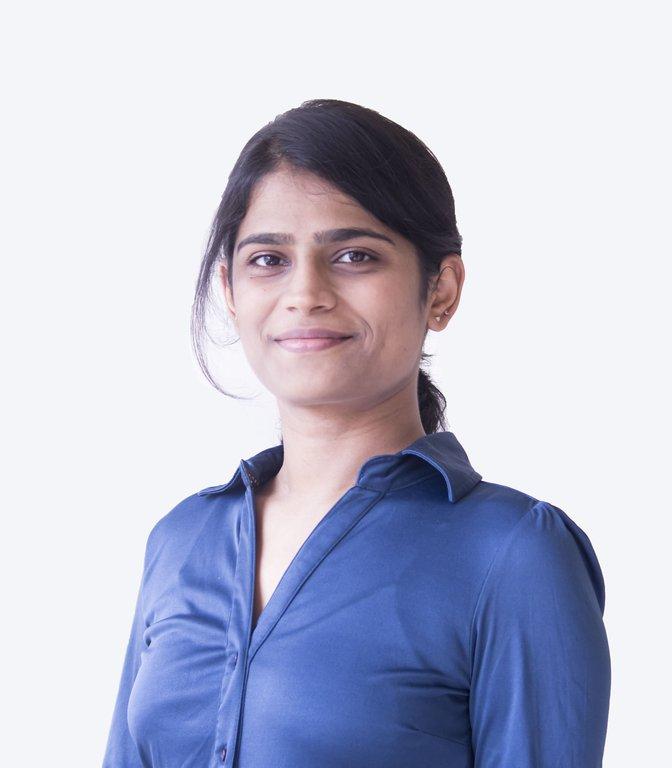


Dhanyashri Kamalakannan
Dhanyashri Kamalakannan Governance Lead | The Pranava Institute

Dhanyashri Kamalakannan is a Governance Lead at The Pranava Institute, New Delhi. An orthodontist by training, Dhanyashri brings a unique perspective to problem-solving, research design and planning, and stakeholder management to Pranava’s research projects. At the institute, her work focuses on creating resources and pathways for engagement for diverse stakeholders in the technology, policy and business ecosystems. She holds a Master’s in Human-Centered Design from the Srishti School of Design, Bangalore. She has worked on several projects at Pranava, including AI in the Public Sector, Design Beyond Deception, and The Unboxing Tech Toolkit Project. She has presented her work at several forums including the Global Innovation Gathering,  Internet Governance Forum 2023, the UN Asia-Pacific Regional Internet Governance Forum, and the Digital Privacy Scholars Network.