Skip to Main Content
Talk Intermediate CC BY_SA 4.0

Computationalizing landscapes: The CoRE stack data structure for social-ecological diagnostics and planning

Proposal status is Approved
Session Description

The CoRE Stack (Commoning for Resilience and Equality) is a community-based digital public infrastructure consisting of datasets, algorithm pipelines, and user-facing tools, that can be used by rural communities and other stakeholders to improve the sustainability and resilience of their local landscapes. It brings together over a hundred variables (and growing) to describe landscape units like micro-watersheds in terms of changes in the area over the years in cropping intensity, water-table levels, health of waterbodies, forests and plantations, and welfare fund allocation, among others, sourced from multiple contributors or built using open ML models operating on satellite data. The unique aspect with the CoRE stack is that all this is assembled in a neat entity-relation data structure which describes landscapes in terms of discrete spatial units with nesting, intersection, and other relationships between them. This makes it computationally accessible to slice and dice the data like we would in a data frame, to understand landscapes more closely. We will present this data structure and the remarkable agility it unlocks in building new applications on top of it. We will demonstrate this through a novel application, CoRE insights, which uses the CoRE stack data on the one side, and extracts landscape diagnostic rulesets using LLMs from research papers on the other side, to build a neurosymbolic framework that can apply these rulesets to diagnose specific problems in a landscape, like whether or not it is suffering from groundwater stress, or rainfed agricultural risk, and so on, with uncertainty information on this determination. Another layer, the CoRE lens, is a library we are developing to interact with the data more easily using a functional programming approach which keeps the code short and easy to debug and understand. We will conclude with real stories of change on the ground using the CoRE stack, where the tools are in use by landscape stewards in 1500+ villages in India to build water security and ecological restoration plans with communities.

Key Takeaways

We will try to drive home the point that in this increasingly data-crazy world, it is important to get underlying data structure right, to be able to leverage the opportunities in front of us now.

References

Session Categories

Introducing a FOSS project or a new version of a popular project
Technology architecture
Story of a FOSS project - from inception to growth
Talk License: CC BY_SA 4.0

Which track are you applying for?

Main track

Speakers

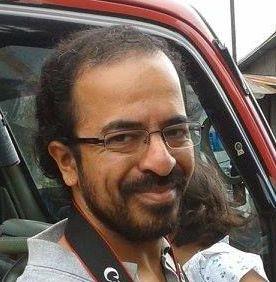
Aaditeshwar Seth
Aaditeshwar Seth Professor, Department of Computer Science and Engineering | IIT Delhi

Aaditeshwar Seth is a professor in the Department of Computer Science and Engineering at the Indian Institute of Technology Delhi, and co-founder of the social technology enterprise Gram Vaani and of the CoRE stack infrastructure and network. He is passionate about building appropriate technologies and participatory tools that can empower marginalized communities to collectivize and voice themselves, and especially to build climate resilience. Several million people, and over 200 organizations worldwide, have directly touched technology platforms built by Aaditeshwar’s team at Gram Vaani, the CoRE stack, and his students at the ACT4D (Appropriate Computing Technologies for Development) research group at IIT Delhi. Many elements of their work have also been adopted by government departments and have influenced the use of technologies for development in the social sector. He is a recipient of the ACM SIGCHI Social Impact Award for 2022. His book published in 2022, Technology and (Dis)Empowerment: A Call to Technologists, argues that the primary goal of technologists should be to bring equality and overturn unjust social and economic structures through their inventions.