How exactly can we teach students the right FOSS etiquette?
References
Session Categories
Which track are you applying for?
Speakers
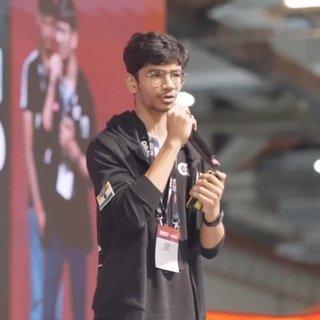
I'm Akash Singh, known as SkySingh04 online. I specialize in DevOps, MLOps and Golang.
I currently handle all things related to DevOps and Infra at FinalroundAI, and work as a DevOps and MLOps Engineer at Sabi. I have previously worked as a DevOps Engineer at Aspora and Embeddings Co. where I worked with AWS, Terraform and Infrastructure as Code, and as a Backend Engineer at CloudSek with my work primarily focusing on Golang and microservices. I'm a Kubestronaut, holding all 5 CNCF Kubernetes certifications [CKA, CKAD, CKS, KCNA and KCSA] and a big believer in all things Kubernetes.
I am active within the Open Source community. I run my own open source community called Point Blank, organize the Cloud and DevOps devroom at IndiaFOSS, and was selected for Google Summer of Code 2024 with Keploy and the Linux Foundation Mentorship 2025 with LitmusChaos.
I was the team leader for Hackglobal Hackathon 2024 which happened in Singapore. I have also participated and won in 7 other hackathons, winning and getting podium finishes all through. I regularly volunteer as a mentor and judge for various hackathons as well. I also attended ACM Winter School 2024.
I have also actively worked as a teacher, trainer and international speaker, both professionally at SwipeGen and CodingZen, and during club meetings as the Team Lead at Point Blank as since I genuinely enjoy talking about tech and sharing my knowledge with peers and juniors alike.
You'll find me with a mic in my hand emceeing on stage or winning Public Speaking Events across India.
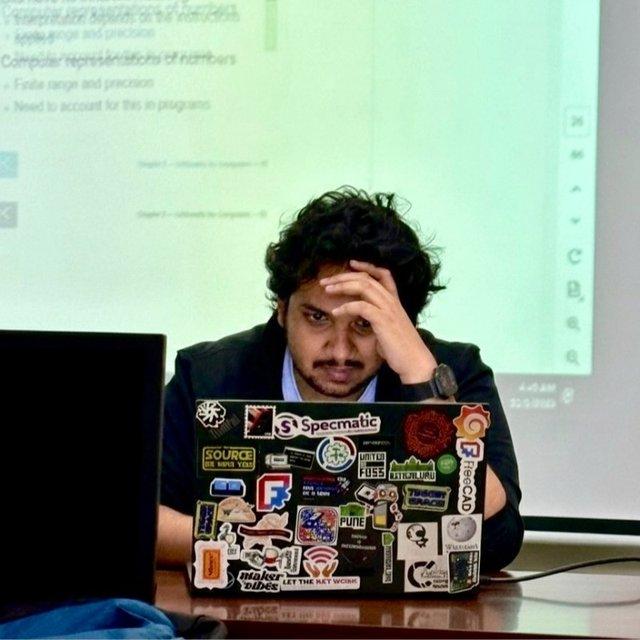
I was created to create.
I know I love computer science because I've tried out almost everything else. After completing senior year with Biology (and ranking 4th all India in boards), I spent two years building UAV's in one of India's best Aero Design teams. During this time, I did marketing, electronics and picked up a little designing on the way. Our team won 3 medals in SAE Aero West 2018 and 2019. Then I went on to participate and win the Hardware edition of the biggest Hackathon of its kind in the world, the Smart India Hackathon 2019.
I was one of the 10 individuals in the world and the only Indian selected by Element14 to run a BBC Micro: Bit summer code club. Won the grand prize for establishing the best code club in DSIS, Bengaluru. Then I worked as a Google Summer of Code Participant with Arduino, my project involved creating a Transpiler which can translate a subset of C/C++ code into MicroPython.
Subsequently, I went on to work for Code Coverage Metrics for GLibC under ELISA (Enabling Linux In Safety Applications) project, as a Linux Foundation mentee. I solved a crucial bug in GLibC that prevented code coverage from working, and submitted a patch and presented my work at Elisa workshop #6. I also Interned at Free Software Foundation where I worked on Free Software activism, moderated LibrePlanet sessions and worked on researching free eBook readers.
Currently I am working with the AOCC compiler team at AMD Bangalore, India. I work on Pragmas, Internal tooling, DevOps (for Compilers), validations, feature development and bug fixing. I also Co-organize the LLVM Bangalore meetup on weekends, which is the largest compiler community in the world.