Skip to Main Content
Lightning Talk Beginner Slides and talk materials: CC BY 4.0

Changelogs Are Not Enough: Writing Community Memory for Kubernetes

Proposal status is Approved
Session Description

Large open source projects do not only need documentation. They also need memory.

Kubernetes moves through hundreds of issues, pull requests, merges, enhancements, deprecations, release updates, meetings, and discussions. A changelog can tell you what changed, but it often cannot tell a new contributor what deserves attention, why something matters, where to look next, or how a project is moving as a community.

This talk is about Last Week in Kubernetes Development, or LWKD, a weekly newsletter that summarizes Kubernetes development activity: code merges, PRs, deprecations, version updates, release schedules, and community meetings. LWKD is a Kubernetes SIG Contributor Experience project, and its repository contains the Markdown files used to produce the weekly updates, with contributions accepted through pull requests.

I will use my experience as a writer and editor for LWKD to talk about technical writing as a real open source contribution path. The talk will explain how editorial judgment works in a fast-moving FOSS project: deciding what is worth including, summarizing technical changes without flattening nuance, preserving uncertainty, linking claims to sources, making review easy, and helping readers orient themselves inside a large project.

The talk is also prescriptive. I will share a practical contribution path for people who want to enter FOSS through writing: how to pick a recurring publication or documentation surface, study its format, start with one small section, summarize one technical change, cite the source, handle review on prose, and build consistency over time.

The goal is to show that writing in open source is not a fallback for people who do not code. In large projects, writing is infrastructure. It helps communities remember what changed, why it mattered, and how contributors can participate.

Key Takeaways

Attendees will learn:

  1. Why large FOSS projects need community memory, not just documentation, changelogs, and release notes.

  2. What LWKD is, how it helps Kubernetes contributors stay updated, and how a weekly technical newsletter can support contributor experience.

  3. How technical writing becomes a real contribution path in open source, especially for newcomers who are still learning the codebase.

  4. How to summarize fast-moving technical work without losing accuracy, context, or nuance.

  5. How editorial judgment works in FOSS writing: what to include, what to omit, how to cite sources, and how to separate fact from interpretation.

  6. How prose review differs from code review, and why feedback on wording, structure, and framing is part of maintainership.

  7. A practical starting path for new documentation contributors: read existing editions, pick one section, summarize one change, submit a pull request, respond to review, and repeat.

  8. Why writing is not a consolation prize in open source. It is one of the ways communities scale knowledge, trust, and participation.

References

Session Categories

Contributing to FOSS
Community
Engineering practice - productivity, debugging
Knowledge Commons (Open Hardware, Open Science, Open Data etc.)
Talk License: Slides and talk materials: CC BY 4.0

Which track are you applying for?

Documentation & Technical Writing

Speakers

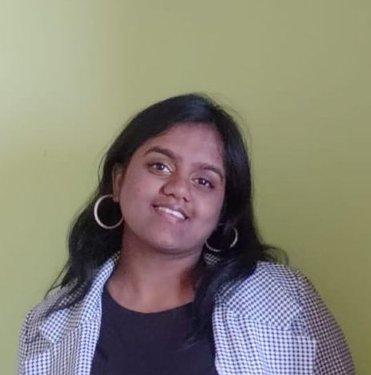
Harini Anand Data and AI SDE | IBM

I currently work as a Software Developer at IBM at the Data & AI Division, on IBM watsonx™,  which is our portfolio of AI products that accelerates the impact of generative AI in core workflows to drive productivity.

I am an Undergraduate Researcher for Software Engineering at UIUC under Prof. Darko Marinov. I am a Research Associate at Georgia Institute of Technology, working at the intersection of ML, systems biology, and interpretable AI, exploring computational approaches to understanding complex systems. I am Biomedical XAI Researcher at Dartmouth College where my research focuses on scalable, low-burden approaches for personalized prediction and monitoring of schizophrenia.

I previously worked at Niramai Health Analytix, a deep tech startup focusing on Breast Cancer and used ML frameworks as a Research Intern at Indian Institute of Technology Hyderabad, to predict gene regulatory networks. I have also built cognitive tools for reducing the onset of Dementia as a student entrepreneur. I led the largest technical community on campus, also held workshops and have given talks on Machine Learning, NLP, and Data Science. 

I’ve been admitted to top summer schools at Oxford University, London and Massachusetts Institute of Technology which specialize in the applications of AI in Healthcare. I am Google KaggleX Mentee, and an AWS Scholar and have been awarded merit scholarships. I am a strong advocate for representation in STEM, and recognized as a High Impact APAC Ambassador for the Women In Data Science Community, an initiative by Stanford University. I am also a Harvard WE Tech Fellow. I am a published AI researcher, a technical keynote speaker and have spoken at universities like Purdue University, IIT Madras, enterprises like Google, Microsoft Research, Intuit, and global conferences like Kubecon+CloudNative Con, MCP Dev Summit, Women Who Go, and FOSS United.

Harini Anand
https://www.linkedin.com/in/harini-anand-2002/