Skip to Main Content
Talk Beginner

The cost of freedom is high: A Guide to Escaping Vendor Lock-In with FOSS

Proposal status is Rejected
Session Description

Two years ago our AWS Glue bill hit $10,000 a month. I moved 80 ETL pipelines to Apache Airflow on self-managed infrastructure and cut it to $400, a 96% reduction. But this talk isn't really about Airflow. It's about the pattern that bill represented, and a repeatable playbook for spotting and escaping lock-in wherever it shows up in your stack.

The counterintuitive lesson and the part that separates this from a tool comparison is that "it's open source" is not the protection you think it is. A single vendor that controls the license can change it on you. What makes tools like Valkey and OpenTofu genuinely safer is governance: under foundation stewardship, no single vendor can unilaterally relicense the project again. I'll show you how to read a project's governance model and license trajectory before you bet your infrastructure on it.

And I'll be honest about when FOSS does not win. Self-hosting trades a cloud bill for an ops bill and a maintenance burden that is very real , the same maintainer-overload that's burning out the wider ecosystem. I'll walk through the exit-cost calculation I actually ran: where Airflow-on-Kubernetes clearly paid off, and where I'd tell you to stay on the managed service and not pretend otherwise.

Attendees will leave with a one-page lock-in audit they can run against any vendor or dependency : exit cost, data gravity, license trajectory, governance model, and the true cost of self-hosting.

Key Takeaways
  • A framework that classifies lock-in (cost, license, data) and a repeatable "lock-in audit" you can run on any vendor or dependency before committing.

  • The real-world math behind a 96% cost cut — $10,000 to $400/month across 80 pipelines and how to tell whether your workload will see the same.

  • Why governance, not just an open-source license, is what actually protects you, read through the Redis→Valkey and Terraform→OpenTofu relicensings.

  • An honest account of when self-hosting wins and when the managed service is the right call, including the hidden ops and maintenance cost.

References

Session Categories

Contributing to FOSS
Introducing a FOSS project or a new version of a popular project

Which track are you applying for?

Main track

Speakers

Sky Singh
Sky Singh Devops | Sabi

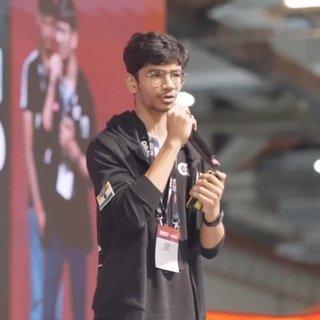
I'm Akash Singh, known as SkySingh04 online. I specialize in DevOps, MLOps and Golang.

I currently handle all things related to DevOps and Infra at FinalroundAI, and work as a DevOps and MLOps Engineer at Sabi. I have previously worked as a DevOps Engineer at Aspora and Embeddings Co. where I worked with AWS, Terraform and Infrastructure as Code, and as a Backend Engineer at CloudSek with my work primarily focusing on Golang and microservices. I'm a Kubestronaut, holding all 5 CNCF Kubernetes certifications [CKA, CKAD, CKS, KCNA and KCSA] and a big believer in all things Kubernetes.

I am active within the Open Source community. I run my own open source community called Point Blank, organize the Cloud and DevOps devroom at IndiaFOSS, and was selected for Google Summer of Code 2024 with Keploy and the Linux Foundation Mentorship 2025 with LitmusChaos.

I was the team leader for Hackglobal Hackathon 2024 which happened in Singapore. I have also participated and won in 7 other hackathons, winning and getting podium finishes all through. I regularly volunteer as a mentor and judge for various hackathons as well. I also attended ACM Winter School 2024.

I have also actively worked as a teacher, trainer and international speaker, both professionally at SwipeGen and CodingZen, and during club meetings as the Team Lead at Point Blank as since I genuinely enjoy talking about tech and sharing my knowledge with peers and juniors alike.

You'll find me with a mic in my hand emceeing on stage or winning Public Speaking Events across India.