Skip to Main Content
Talk Intermediate MIT License

OpenSource Models as a Case Study for Alignment

Proposal status is Rejected
Session Description

Most people treat alignment in LLMs as a solved problem. The model refuses, so it must be safe, right? This talk challenges that assumption by going a level deeper.

I'll walk through how I used representation engineering and mechanistic interpretability to surgically remove safety guardrails from open-source models, layer by layer. The technique (based on Arditi et al.) works by identifying the "refusal direction" in the residual stream and projecting it out. What you get back is a model that behaves exactly as it did before training-time alignment. And that gap tells you a lot.

I ran this on three models: GPT OSS 120B, Sarvam 30B, and Sarvam 105B MoE (the largest Indian LLM to date). The results are published on HuggingFace at aoxo/sarvam-30b-uncensored and aoxo/sarvam-105b-uncensored, and the process was fully open-source throughout.

The core question this talk answers is: when you peel away the RLHF and instruction tuning, how aligned is the base model really? For some of these models, the answer is "more than you'd think." For others, not so much. We'll go through what the internal representations look like before and after ablation, how the refusal geometry changes across layers, and what that tells us about the robustness of the alignment approach used.

We'll also look at how Anthropic has approached this differently at the architectural level, and why their alignment holds up better under this kind of probing.

Tools used: TransformerLens, HuggingFace Transformers, and a few custom hooks. All open-source, all reproducible.

Key Takeaways
  • How representation engineering works under the hood and why it is a more principled way to probe alignment than prompt injection

  • What abliterating each layer of a model actually shows you about where safety behavior is stored vs. generalized

  • A comparative look at how Sarvam 30B and 120B MoE hold up under this kind of interpretability audit, versus GPT OSS 120B

  • Why "the model refuses" is not the same as "the model is aligned," and how to tell the difference

  • How to run these experiments yourself using open-source tools on any open-weight model

References

Session Categories

Tutorial about using a FOSS project
Contributing to FOSS
Talk License: MIT License

Which track are you applying for?

Main track

Speakers
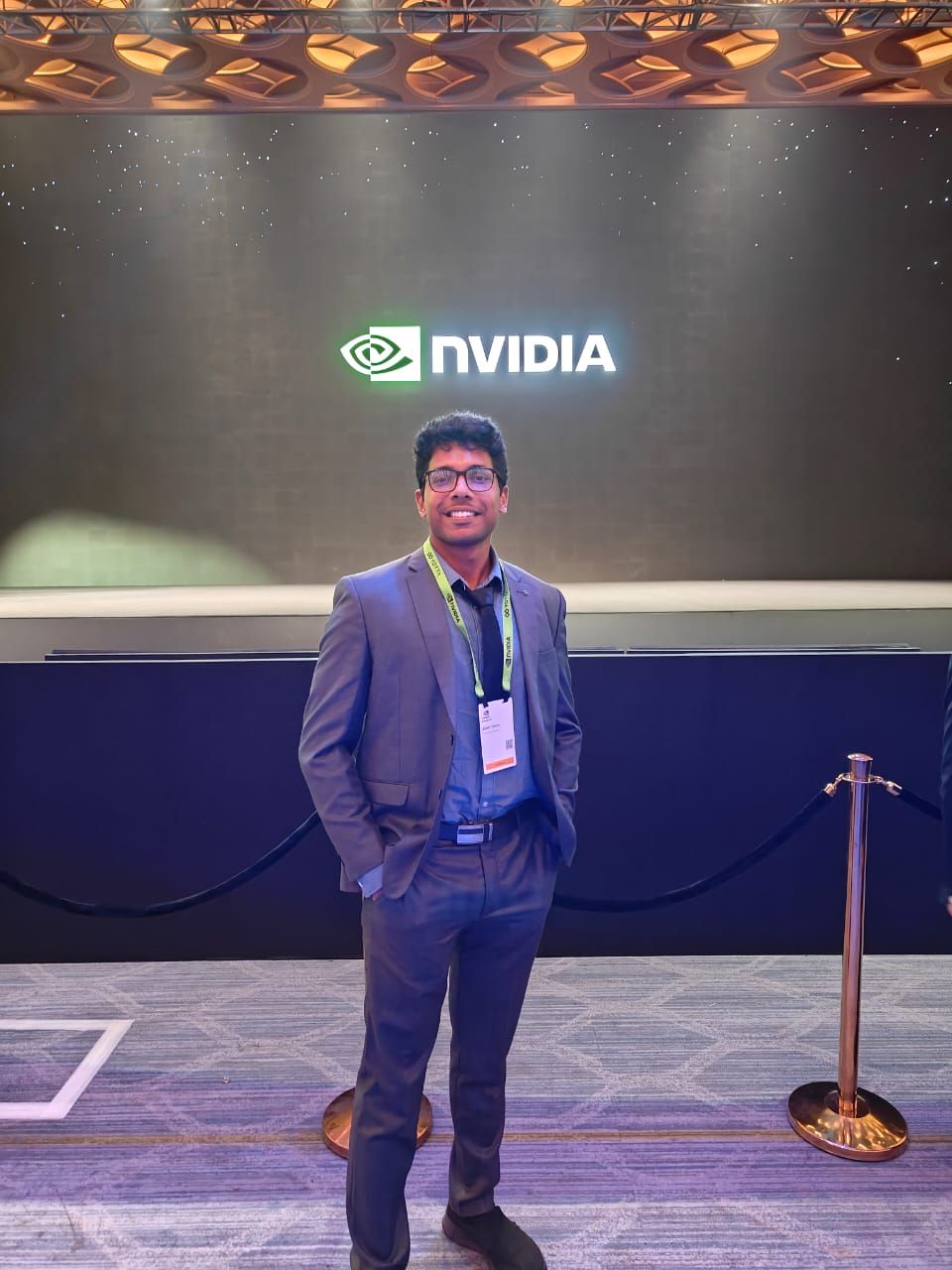
Alosh Denny
Alosh Denny AI Engineer | TinkerHub

Alosh Denny is an AI/ML engineer and researcher from Kerala, currently working as CTO at MediShift and Senior AI Engineer at Aleddo Technologies. He has a B.Tech in Computer Science from CUSAT and has been doing AI safety and mechanistic interpretability research alongside production AI work for the past couple of years.

His open-source work includes abliterated versions of Sarvam Models and occassionally reverse engineering software, more recently Google's SynthID.

He spoke at IndiaFOSS 2025 on making LLMs transparent for science using open-source interpretability tools. Outside of AI, he teaches B.Tech coursework at CUSAT and occasionally takes his RE Himalayan up to altitudes where the oxygen gets thin.