Skip to Main Content
Talk Intermediate

Beyond Words: Exploring the Minds of Large Concept Models

Proposal status is Withdrawn
Session Description

In this talk, we’ll see how LCMs represent a major evolution from Large Language Models. While LLMs predict text by chaining together tokens, LCMs operate at a much deeper level—mapping and reasoning with abstract concepts like regret, curiosity, morality, and purpose. I’ll walk through how these models decompose high-level human ideas, show how tools like Meta’s Sonar test conceptual depth, and demonstrate how LCMs can summarize, generate, and even empathize.

The objective is to introduce, explain, and demonstrate how LCMs go beyond traditional language models by understanding and reasoning about human concepts—such as emotions, intentions, causality, and abstract ideas—paving the way for more intelligent, intuitive, and human-aligned AI systems.

Slides:

https://docs.google.com/presentation/d/1gJCDgS_SmJy3M57f7fDvRCw5zqUgH5ldrfAB-XfVOmQ/edit?usp=drive_link

Code:

https://github.com/virajsharma2000/v-lcm-demo

Key Takeaways

Recent advances in large language models (LLMs) have demonstrated impressive abilities in text generation, summarization, and translation. But, these models often struggle to move beyond surface-level understanding. In this talk, we introduce Large Concept Models (LCMs)—a new class of models developed by Meta AI, designed to go beyond predicting words and instead reason with high-level human concepts like emotion, intent, causality, morality, and abstract ideas. LCMs represent a shift from token-based prediction to concept-based reasoning. We will explore how LCMs internally decompose complex sentences, group related meanings, and maintain stable conceptual representations across different inputs. Meta's Sonar will be used to demonstrate how concept understanding is used to detect nearness and predict sentence output.

Proposal agenda

1. Intorudctions

2. LLM flows description

3. What is LCM

4. More about LCM

5. Definition

6. Demonstration of SONAR to predict next sentence

The target audience includes AI/ML developers, NLP researchers, cognitive scientists, product designers, educators, and curious students.

References

Session Categories

Introducing a FOSS project or a new version of a popular project

Which track are you applying for?

Main track

Speakers

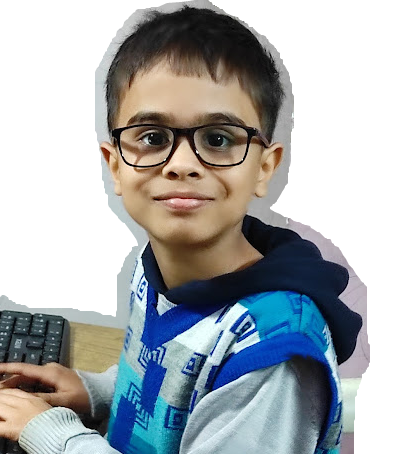
Viraj Sharma
Viraj Sharma Student | Presidium Indirapuram Delhi

I’m Viraj Sharma, a passionate programmer interested in Python, AI, and computer vision. I am studying in class 8, presidium school indirapuram delhi. As an active python community member, I enjoy learning from experienced developers and sharing insights. I have worked with OpenCV, TensorFlow, and Streamlit, exploring computer vision, automation, and AI. I love solving problems, building projects, and understanding how technology impacts the real world. I actively participate in tech meetups, hackathons, and open-source communities, gaining hands-on experience with deep learning, NLP, and data science. I've also given speeches at PyDelhi, pyconfererence bangalore, pycon lithuania, foss events discussing Python frameworks and AI applications.