Skip to Main Content
Talk Beginner Apache 2.0 & CC BY 4.0 First Talk

Your Threat Model Has an Opponent : Game Theory, Adversarial Thinking, and the Practice of Threat Modelling

Proposal status is Review Pending
Session Description

Security is no longer a problem that pops up once in a while (you know, if you're present on any alive form of social media). High time we started talking about it, right?

For many, security fixes have started to look like asking AI to do a thorough sweep of the codebase and spitting out a list of vulnerabilities. Alright, I got a list of vulnerabilities, what now? Fix it claude? That’s where we draw the line.

Understanding how an attacker might exploit a system requires looking beyond individual weaknesses. Attackers make decisions, adapt to defensive measures, and exploit relationships between components. How do we reason about these interactions when designing and securing software?

This session explores that question through a practical example of an online shopping application. We'll start with a simple attacker-versus-defender scenario and use it to introduce the idea of game theory in security. From there, we'll move into threat modelling: identifying trust boundaries, data flows, attack surfaces and potential threats.

A central part of the session will be a practical walkthrough of Precogly, an open-source threat-modelling platform and official OWASP project. We'll explore how its Data Flow Diagram editor, threat libraries, countermeasures and risk register help developers turn architectural security analysis into something structured and reviewable. We'll also look briefly at its AI-assisted capabilities and how they can support, rather than replace, human security judgement.

To close, I’ll extend our example to an AI-enabled application and look at what changes when an application can interact with tools and internal systems. This will give us a chance to discuss concerns such as prompt injection, excessive agency and authorization boundaries.

The goal is to connect the way we think about attackers with a practical developer workflow, and show how we can move beyond vulnerability lists towards understanding and addressing threats throughout the development process.

Key Takeaways
  1. Think beyond vulnerability lists: Understand why security analysis needs to consider attacker behaviour, system interactions and the consequences of defensive decisions.

  2. Understand the basics of threat modelling: Recognise system components, data flows, trust boundaries and attack surfaces, and see how they help identify potential threats.

  3. Explore threat modelling with Precogly: Get a practical introduction to an open-source OWASP threat-modelling platform and see how its diagrams, threat libraries and countermeasures help structure security analysis.

  4. Recognise security challenges in AI-enabled applications: Understand why prompt injection, excessive agency and authorization boundaries matter, and where AI-assisted threat modelling can help or fall short.

  5. Knowing that I mix up game theory into everything nowadays.

References

Session Categories

Tutorial about using a FOSS project
Technology / FOSS licenses, policy
Engineering practice - productivity, debugging
Technology architecture
Introducing a FOSS project or a new version of a popular project
Talk License: Apache 2.0 & CC BY 4.0

Speakers
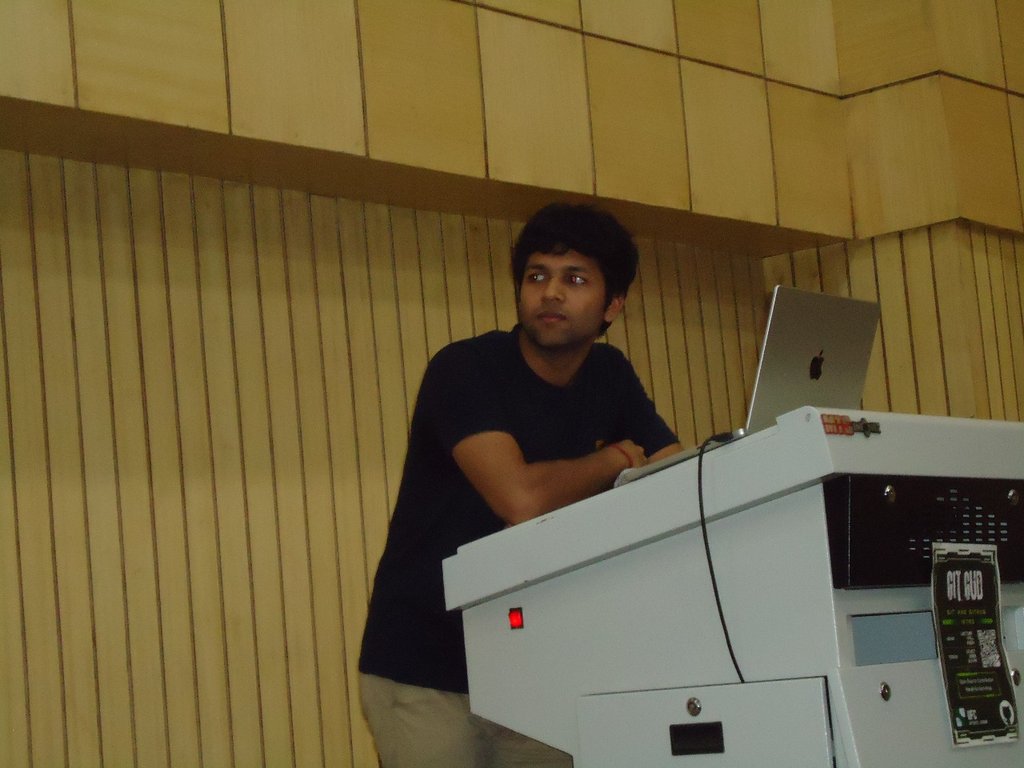
Siddharth Bansal
Siddharth Bansal Technical Intern | FOSS United

I’m Siddharth, an open-source developer, and community builder. Currently contributing to Precogly and interning at FOSS United, with a background in leading projects at OWASP(BLT) and building developer-focused tools. Founded FOSS community at USAR. Love to be a dilettante.


I’m running - a startup, a community, an internship and random projects. 3rd year student. Nix user, love Mark Rober, Seeker & kurzgesagt videos.
https://github.com/sidd190

Reviews

No reviews yet.