Notes from the Open Source Summit India 2026
Sharing my experience from the OSS Summit 2026
Two weeks into being Programs Intern at FOSS United, and I was at my first conference of this scale. Walking in, it's a lot. Hundreds of people who all seem to know each other, or at least know of each other, in the specific way open source folks do. There's an expectation of networking that I wasn't fully prepared for. Small talk has never been my strongest suit.
But it turned out to be genuinely nice. A lot of these conversations reminded me why this work matters in the first place.
Open source is tireless work. It gets recognition, sure. Just nowhere near what it deserves.
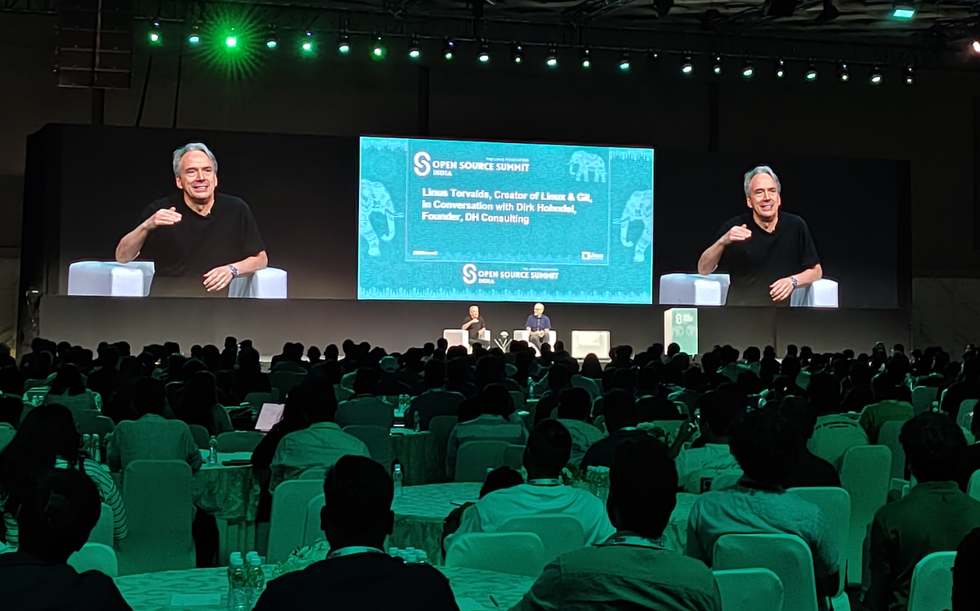
Seeing Linus Torvalds in person, two weeks into open source work, was a bit surreal, git is such foundational infrastructure. He barely codes now, by his own admission, more development lead than programmer. His real job is conflict resolution: using git merge to understand how thousands of contributions fit. Scaling Linux, he made clear, isn't about tools. It's people, and trusting them to make the call.
The Open Source Innovation Powering India's Digital Public Infrastructure Panel discussion led me onto reading about DPIs (Digital Public Infrastructure). Radha from Networks for Humanity talked about something called DD. Think of it like DNS, but for identity credentials instead of websites. The pitch was open infrastructure that lets networks actually talk to each other, instead of everyone building their own walled version of the same thing.
Digiyatra, in the panel, was an interesting showcase. The data itself is fully decentralized, no central database sitting somewhere collecting everyone's info. But the credentials running on top of it are still proprietary. DPI at scale, apparently, is full of these tradeoffs.
An interesting fun parallel to draw from Ansh’s talk on Strengthening India’s FOSS Community was about FOSS in India tying back to older ideas – swadeshi, self-reliance, who actually gets to own the tools a country runs on.
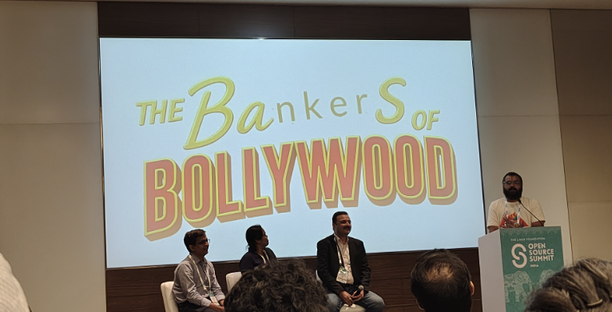
The Panel Discussion A Balancing Act: OSPOs in Action Within BFSI (Banking, Financial Services, and Insurance) one was a good reminder that "banks love open source" and "banks can actually use open source easily" are two very different sentences. The panel had OSPO(Open Source Program Offices) heads from NatWest, HDFC, and Linux Foundation. BFSI orgs aren't resistant to open source, they're just operating in a space where every dependency needs a compliance trail.
Closed out the two days with the Women & Non-Binary in Open Source Gathering. It felt oddly nice, after two days of moving through rooms where men made up an obvious majority, which is open source, sure, no surprises there. Just being in a room where women and non-binary folks were sharing their stories, their experience of navigating a space that's still very male-dominated, was insightful.
It was heartwarming to hear everyone talk about what inspired them to contribute to this landscape. The conversations weren't just the usual networking small talk. Technical insights, sure, but also real conversation around what it actually means to be a woman or a non-binary person in this space.
I came in expecting a bunch of talks about code. I left with a lot more thoughts about the people behind it – which, in hindsight, feels a bit more interesting personally. Good first conference.
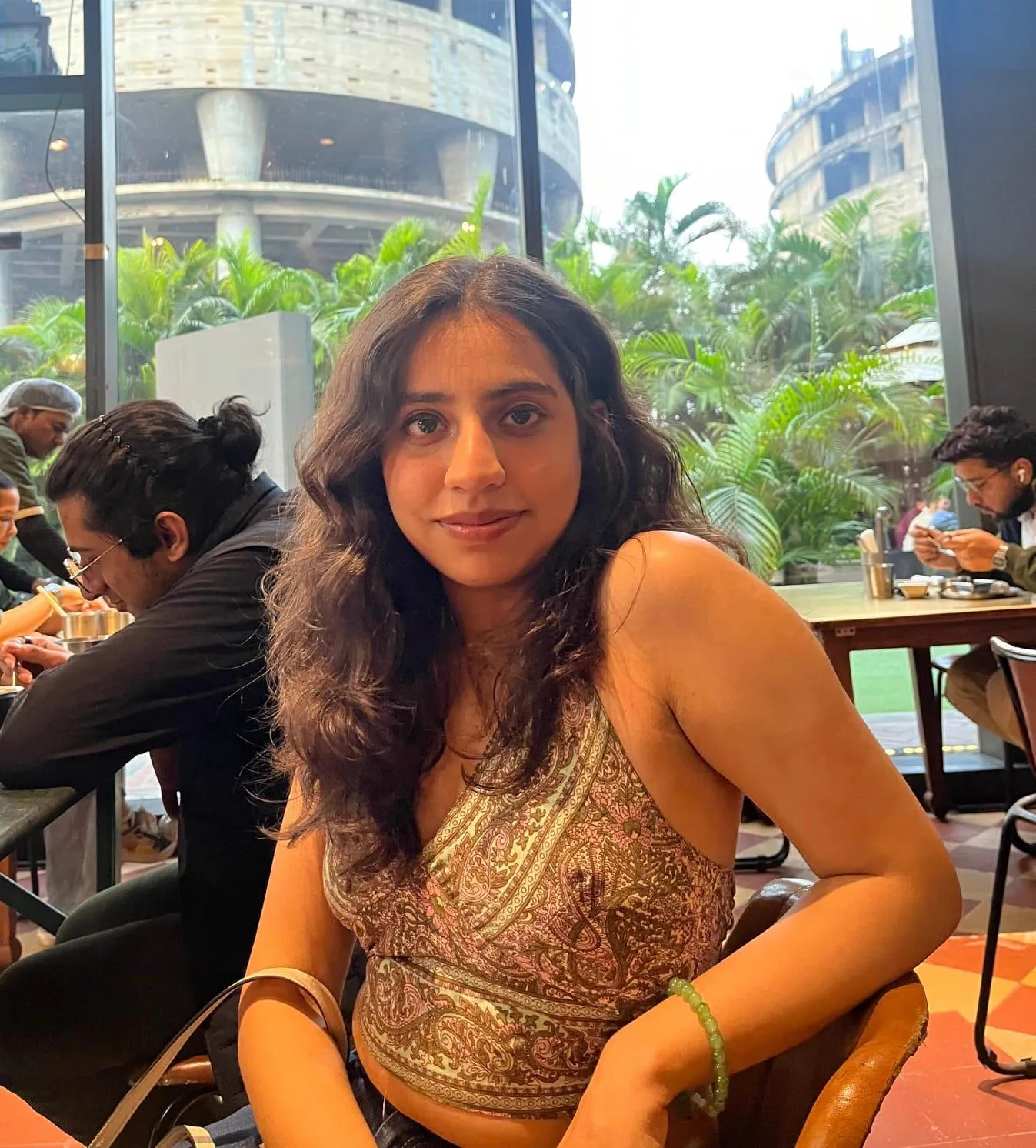
Kratika Tekwani
Programs Intern @ FOSS United
No comments yet. Login to start a new discussion Start a new discussion