Learning to Manage - Building a shared foundation
A group of people needs a shared foundation to become a team, and in this post, I highlight aspects of the team's shared foundation.
It’s been two eventful years at the FOSS United Foundation for me - hiring a few people and seeing some move on to better pastures, trying to understand and influence the culture of the team and by extension the broader FOSS United community, talking to hundreds of volunteers across the country, engaging with thousands of community members at in-person events and online, trying to learn what strategy means and learning more about people management than i ever imagined. Leading the Foundation is the job I imagined in my earlier career as a Scientific Software Developer, but moving from an Individual Contributor role that only required a little people management (mentoring juniors, working with interns) to full-time people management came with a steep learning curve. I was interested in people management for a few years before joining the Foundation, so I theoretically learnt the basics, but putting the theory into practice was neither easy nor straightforward.
In this series of posts, I will talk about Learning to Manage - managing myself as a people manager, learning to manage a team, learning to build an organization and a community, learning to lead, and more. At the end of the day, I’m managing.
Why write about my experience in management? There are many reasons, but the primary one is repetition. Managing a team, in my personal experience, requires talking to the team about the same thing, over and over again, individually and as a group. We could be talking about philosophy, culture, mental models, frameworks, heuristics, or more. And everything is repeated multiple times because rewiring people’s minds to think differently takes time.
Let’s start with how we strive to build a common foundation for everyone within the team. One of the first things I did as soon as I started at the Foundation was create a “FOSS Reading Material” Mattermost channel to share “mandatory” reading material with the team. The Foundation staff had a few quirks - the team was young, the Foundation was their first and only experience with the FOSS ecosystem for most of them, and the Foundation was also the first job for most. I wanted to ensure that the team could at least learn through osmosis, so I shared the writings of people steeped in the Indian and Global FOSS ecosystem.
I shared posts by Armin Ronacher, creator of Python FOSS projects like Flask, Jinja2, and more, and I shared the talk on Technical leadership and glue work by Tanya Reilly, which is especially relevant given that most of the work we do at the Foundation is glue work for the Indian FOSS ecosystem. We read the influential Roads and Bridges report by Nadia Eghbal (Nadia Asparouhova). The report, though originally published in 2016, is still surprisingly relevant to understanding the dynamics of the FOSS ecosystem. You might also recognize her from her influential book Working in Public or the guide to financial support for open source that she maintains. I shared a post by Brett Cannon, Python core developer, on Saying thanks to Open Source Maintainers. To understand the value of project management in FOSS projects, I shared a keynote by Sumana Harihareswara. We discussed the Miranda Heath report on Burnout in Open Source Software, and we also watched the talk by Leonard Richardson, creator of Beautiful Soup, on how to maintain a popular python package for most of your life ~~without~~ with burning out.
To understand the Indian scenario, we read the State of FOSS in India report by CivicDataLab, the Analysis of FOSS Government Policies in India by Apar Gupta, the IT for Change policy brief on ICTs in School Education - Outsourced vs integrated approach, and the 2009 Study in India on the Economic impact of FOSS by Prof. Rahul De, IIMB. Later in the year, we started the Articles We Love forum category and shared articles/reports and summaries publicly.
Other team members slowly hopped on the wagon. For example, Ansh shared Balancing makers and takers to scale and sustain open source by Dries Buytaert, the founder of Drupal, Mangesh shared the Write the Docs documentation best practices, and Siddharth shared the Humanitarian FOSS (HFOSS) Development syllabus at RIT, to name a few, and over time, the FOSS Reading Material evolved into the Digital Commons Reading Material.
For the young software team specifically, I shared Choose Boring Technology, and the concept of innovation tokens, and I shared articles on how to write code that reviewers will love and on how to review code as a human, although the last part might not be relevant in 2026 if AI is writing much of your code or if you’re relying on AI for reviews. We discussed the blameless postmortem culture and lessons learned in 35 years of making software, and we watched Rethinking the Developer Career Path by Randall Koutnik to gain a better understanding of our technical work and how we grow professionally.
This is only a small fraction of what we shared and discussed internally to build and sustain a common foundation for the staff. Some of these references came up independently in recent conversations, validating their timelessness. Life came full circle when a person I interviewed recently mentioned that the “Roads and Bridges” report helped her understand the FOSS/Digital Commons ecosystems. And the reading list grows every month, for as long as people from the digital commons ecosystems pen their thoughts and experiences, and we will continue reading to ensure that our understanding of the digital commons is larger than our own individual lived experiences within it.
Finally, over time, it’s important to understand that the shared foundations become shared abstractions. For instance, “being glue” is all I need to say to bring up the importance of glue work, “roads and bridges” is sufficient to bring up the importance of FOSS digital infrastructure, getting unstuck is short for project management advice for open source projects, and “solution implementer - problem solver - problem finder” is short for rethinking the developer career path.
What timeless FOSS/Digital Commons reading material have you come across? Please consider sharing it with us. And keep tuning in to the FOSS United blog to check in on how i’m Learning to Manage.
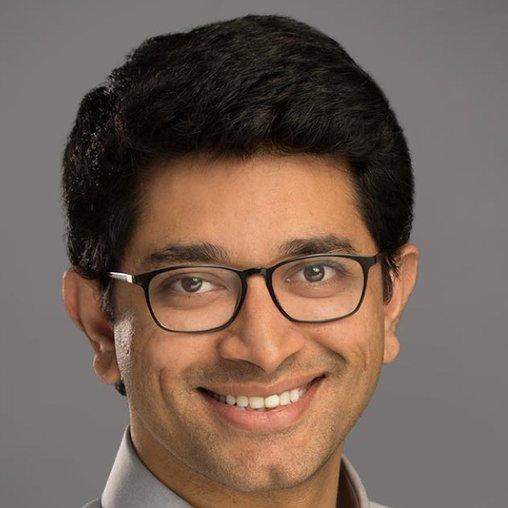
Poruri Sai Rahul
CEO, FOSS United.
No comments yet. Login to start a new discussion Start a new discussion